Strong Recommendation: Code 46

Code 46

The most amazing wet-dream of a movie for any middle-aged man whose been on a business trip to Asia, dreamed of seducing a 25-year-old gamine girl and loves a frosty mix of high-tech gadgets described in a polyglot argot of French, Spanish, Arabic, Urdu, Mandarin and Management cant:

Gracias
De nada
Pour quio
Ni-hao
Tiamo
Salut, ca-va?
A bientot

It’s filmed in a wash of color where faded dreamscapes bleed into daylight as nighttime activity leads to harsh indoldent noon clarity.

See subway trains and international planes; dreams and waking time; marble halls and security stalls; jet-lag and coffee; noodles eaten in backstreet booths.

See them shelter from a rain of sunshine ‘neath a shared coat at dawn.

See toll-booths on the city borders where the Outlanders hustle a living from the limousine liberals.

See the corporate architecture of tomorrow-land juxtaposed with shady dives where the cognisati meet with divas and fantasy unfolds into reality (what else is travel actually for?).

See the hero hack his way into corporate strongholds with empathy-virus enabled intuitive riffs on bespectacled high-class call girls in reception areas we half-recognize, half-abhor. “Tell me something about yourself.”

See deserts segue into cityscapes which segue into interiors of silken pajama-game intimacy: from the wide-open high-way to the squishy midnight my-way.

See the fever of love mingled with repulsion in Arabian one-night cheap hotels where wrist straps best science and the heat oppresses the unworthy.

See technology embedded in the soul.
See mystery ennobling the role.
See tomorrow, today.

See the most beautiful scenes ever filmed (53 minutes into the movie): mind-reading an amnesiac, driving an SUV on a dark desert highway. Shadow and light play and a soundtrack to sleep on echo’s still.

Hear dialog that will infest dreams you’ll have long after the final credits roll:

William: I always wondered why the coyote didn’t just go out and buy a Road Runner. He had enough money to buy rocket-powered roller-skates so he had money to buy a Road Runner.
Maria: How did you do that?
William: What?
Maria: Y’know I was thinking something and you heard me–that is weird.
William: Intuition – I can feel what you’re thinking.
Maria: No, I don’t believe in mind-reading, it’s all a trick.
William: It’s not a trick. It’s a gift.
Maria: What am I thinking now?

And

Maria: You have a kid?
William: Yeah?
Maria: Chico or chica?
William: Chico.
Maria: I bet he’s special.
William: He *is* special.
Maria: Everybody’s children are so special. It makes you wonder where all the ordinary grown-ups come from.

See it all end for her in headscarves and Muslim wilderness, over against his corporate bleached white sanity preserved with selective memories of adventures past. Domesticity at the end of the tunnel. Cover preserved.

Go rent this movie and blow your mind!

Orwell on language

Yesterday I heard the wordsmith of the Republican Party, Frank Luntz, on PBS’s Fresh Air extol the virtues of George Orwell’s essay Politics and the English Language. He begged anyone interested in the real meaning of Orwellian to read it.

Orwell

Ignoring the delicious irony of a master of propaganda twisting the common use of Orwellian away from the Newspeak of 1984 (of which he is a modern practitioner, advising phrases such as “Responsible Exploration For Energy” over “Drilling For Oil”) I enjoyed the ruthless clarity of Orwell’s essay.

It has a lot in common with more recent indictments of political and managerial cant found in books such as Why business people speak like idiots and Gobbledygook.

Orwell discusses why “the slovenliness of our language makes it easier for us to have foolish thoughts”. He shows how, especially in political and business speeches, “prose consists less and less of words chosen for the sake of their meaning, and more and more of phrases tacked together like the sections of a prefabricated henhouse”. Dying metaphors, meaningless words and a preference for the passive voice over the active are listed as common ways we avoid the real mental effort involved in writing clear prose.

Corporate communicators will recognize this passage describing the tired familiarity with which many executives speak from the podium:

When one watches some tired hack on the platform mechanically repeating the familiar phrases … one often has a curious feeling that one is not watching a live human being but some kind of dummy: a feeling which suddenly becomes stronger at moments when the light catches the speaker’s spectacles and turns them into blank discs which seem to have no eyes behind them. And this is not altogether fanciful. A speaker who uses that kind of phraseology has gone some distance toward turning himself into a machine. The appropriate noises are coming out of his larynx, but his brain is not involved as it would be if he were choosing his words for himself.

Orwell challenges us to make a difference.

A scrupulous writer, in every sentence that he writes, will ask himself at least four questions, thus:

1. What am I trying to say?

2. What words will express it?

3. What image or idiom will make it clearer?

4. Is this image fresh enough to have an effect?

And he will probably ask himself two more:

1. Could I put it more shortly?

2. Have I said anything that is avoidably ugly?

His rules of composition are clear and uncompromising:

1. Never use a metaphor, simile, or other figure of speech which you are used to seeing in print.

2. Never us a long word where a short one will do. If it is possible to cut a word out, always cut it out.

3. Never use the passive where you can use the active.

4. Never use a foreign phrase, a scientific word, or a jargon word if you can think of an everyday English equivalent.

5. Break any of these rules sooner than say anything outright barbarous.

Would that it were so.

Joan

Joan

Joan Fox was buried on December 20, 2006.

She was my mother-in-law, someone it had been my privilege to know for nearly 20 years. She was buried in the village graveyard in Mungret, Ireland. She’d lived her whole life within 20 miles of her birthplace. Yet she’d traveled the world: Hawaii, Russia, California and her beloved Florida. She’d married Charlie when she was only 22 and he was 34. His job with TWA at Shannon allowed them the free travel. Her daughter Sandra benefited, visiting the Bay Area, where we met.

Over 300 came to Joan’s funeral that week before Christmas. Farming families who had known her since she was a child. Friends from the airlines. The wide circle of people in the West of Ireland who she’d touched.

At the funeral Mass she was described as a lady. When Sandra was at boarding school some of the other girls thought she was film star when she came to visit.

The death notice in the Irish Times read:

FOX (nee O’Brien) (12, Thornbrook, Corbally, Limerick and formerly of Conigar, Mungret) – December 17, 2006, after a short illness borne with great courage and dignity, at Milford Hospice, Joan, beloved wife of Charles and dearly loved mother of Sandra and Richard, sister of the late Mary (Herlihy) and Derry (Moloney); deeply regretted by her son-in-law Ian, daughter-in-law Deirdre, her beloved grandchildren Evan, Emily, Jamie and Neil, brothers Michael, Gerard and John, sister Geraldine (Costelloe), extended family, relatives and friends. Rest in peace. Removal from Milford Hospice to St Nicholas Church, Westbury, Corbally, tomorrow (Tuesday) evening at 7.30 o’clock Requiem Mass on Wednesday at 12 Noon. Funeral afterwards to Mungret Cemetery.

At the end of the Mass I read a short essay by Adi Da Samraj:

What Is More Than Wonderful Is Not Threatened

Fear of death is fear of surrender to Infinity.
Learn to surrender, to exist at Infinity while alive, and fear of death dissolves.

Fear of death is fear of the Unknown.
Realize the Eternal Unknowability of the Totality of Existence, and fear of death is transcended in the Feeling Beyond Wonder.

If Happiness (or Freedom) depends on the Answer to the Question, then there can be no Happiness (or Freedom).
The Question cannot be satisfactorily or finally Answered.
For one who Abides at Infinity–Happy and Free, at ease with his or her Ultimate (or Divine) Ignorance–the Question and the Answer are equally unnecessary.

What began will come to an end.
What is More than Wonderful is not threatened.
The Process of the Totality of Existence is Transcendental, Inherently Spiritual, and Self-Evidently Divine–and it is Eternal.
Only a fraction of the Whole can pass away in any moment, since only a fraction of the Whole appears in any moment.
Therefore, the True Divine Heart Itself is Always Already Full of Love and More-than-Wonder.

“I” is the body-mind, the fraction of the Whole that is now appearing and will soon disappear.
“I” must be surrendered to the True Divine Heart, to the Whole–Which Is Infinity, and Love, and More (and More) than even Wonder knows.

Easy Death, page 97.

The nail that sticks up will be hammered down

Fascinating interview in today’s Financial Times (subscription required) with Takafumi Horie, the Japanese internet tycoon who spent three months in police detention after his company Livedoor was raided on fraud charges. He’s now awaiting trial and faces a possible 5-year sentence.

Hammered down He quotes the old Japanese adage The nail that sticks up will be hammered down to explain his treatment at the hands of the Japanese bureaucratic establishment, claiming they were resentful of his overnight success in stark contrast to their own measured progress up the ranks.

This might just be the rants of an entrepreneur who finds himself on the wrong side of the law. We’ve seen chaps in similar pickles make improbable claims in this country. Back in the late 80’s Charles Keating blamed government regulators for the failure of Lincoln Savings. Ken Lay blamed a conspiracy of news media and short sellers. Lord Conrad Black, the Canadian/British newspaper magnate blamed “ignorant, lazy, opinionated, intellectually dishonest and inadequately supervised” journalists who worked for him for part of his downfall.

I’ve yet to read about a Western businessman who blamed socially sanctioned extremes of egoistic behavior for their misdeeds. Yet, many senior executives must seem, in terms of Japanese cultural norms, as suffering from this very disease. We are all, from the C-suite to the soup line, sorry egos, perennially seeking for elusive and transitive happiness. As Adi Da notes, we spend our lives involved in “usual round of obsession, fear, and seeking — in which the egoic self is the actor and the meaning of the drama.”

However, the theaters in which our egoic dramas are enacted do have significantly different stage sets to prance in front of and scripts to learn by heart. You better find out early on if you’ve been cast in a 75-80 year run at the Kabuki or Radio City Music Hall and know how to play the game accordingly.

As Richard Lewis reports, the rigorous way in which Japanese society deals with nonconformity starts in early childhood. Rather than encouraging expressions of individuality, Japanese parents and teachers reinforce the primacy of the group and chastise those who stand out. While they might not literally use the hammer, they enforce a web-centered social order where the individuals needs are subsumed by the groups with extensive moral and social obligations recognized up and down the hierarchy.

I can only assume the older Japanese bureaucrats must regard Horie-san with the same degree of incomprehension as Westerners regard occasions of extreme of group-oriented behavior among Heaven’s Gate cultists or Stepford Wives.

It’s straightforward enough to ID an actor from the extreme ends of the spectrum – the Japanese saleryman and the Texan oilman. Where things get interesting is in the fuzzy edges of culture.

Tall Poppy Consider Australia. Who would’ve thunk that the same country which produced rugged individualists like Crocodile Dundee and Ned Kelly could have anything in common with Japan?

Lewis struggles to classify a society where there are echoes of Japan in a rough n’ tumble bushwhacking world:

Too much praise raises expectation and puts the high achiever under insufferable pressure — and Australians hate being pressured.

This tortured form of modesty is greatly respected by most Australians and if it is not observed by the successful, they will rapdily fall victim to the “tall poppy syndrome.” Australians are totally cynical of people in power or with too much wealth; they respect the little person, the “battler”, rather than the winner.

The conundrum is the many reports that plutocrats like Kerry Packer were “widely respected” and the evidence that dysfunctional Murdoch clan continues to avoid poppy-whackers, suffering more from self-inflicted sibling rivalries (similar to the Pritzker battles over the Hyatt fortune here in the US).

So, at the end of the day, we are left wondering what lasting constraints cultural norms play in today’s Flat World. If Horie-san had hightailed it to Texas and the Stepford Wives relocated to Roppongi Hills everyone might have lived happily ever after.

How about you? Are you culturally suited to the time and place you find yourself in?

Ford Motor Acceleration Tour

If it’s good enough for Pro-Track, it’s good enough for Ford Motors.

One of the guidelines for emerging speakers in this year’s NSA Pro-Track class was to establish a toehold on the “Animal Circuit” — speaking at neighborhood Lions and Kiwanis Clubs. They don’t pay squat, but they provide a newbie speaker with a ready audience to try material on.

Ford F-Series So I was not surprised to read that 30 senior executives from troubled carmaker Ford Motor in Detroit will tour 100 cities across the US “making presentations to groups such as chambers of commerce, Rotary and Kiwanis clubs and city councils”. This grassroots effort aims to introduce audiences to new vehicles and stress that Ford quality is on a par with Asian rivals.

Ford Edge

Ford’s communications team is not just sending the senior guys out armed with a PowerPoint and a smile. The presentations will include (“where practicable” ) a display of a new F-Series or Edge crossover vehicle. And, in a nod to audience demographics, executives will be paired with cities where they have a personal connection. Example: Jon Hinrichs, head of North American manufacturing, will speak in his hometown of Columbus, OH.

One can imagine the “local boy makes good” articles this will generate in small town papers.

Auto executives are taking Pro-Track advice to heart. The public speaking experience they’ll gain at Kiwanis and Lions Clubs will be a valuable addition to the manufacturing experience on their resumes should Ford continue to steer downhill.

Pro-Track 2007 Registration

Whether you’re a current or aspiring professional speaker, trainer, coach or self-employed knowledgeworker Pro-Track can help you take your business to the next level. I benefited from Pro-Track 2006 (to read my reports on each of the meetings search this blog for Pro-Track). The registration for the 2007 classes which meet in Oakland and run from January 13 until November is still open.

Benefits

  • Learn to build upon your strengths and expand your business model
  • Learn from successful speaking professionals in numerous topic and market categories
  • Build your speaking business from the ground up
  • Re-energize your business with new ideas, products, materials, and marketing strategies
  • Design your business networking system

Features

  • Topic Development
  • Content Development
  • Presentation Development
  • Business Planning
  • Marketing, Promotion, and Sales Systems
  • Presentation Skills Coaching
  • Media and publicity systems

And much, much more!

Costs

For only $1,895, Pro-Track participants receive over 90 hours of training. But that’s not all! Pro-Track 2007 participants are also admitted to all NSA/NC Chapter meetings for free, during the program year.

Apply online today or download and fax your application to 510-530-5370. Direct questions to Michael Holland at (510) 502-9209. Tell him Ian sent you.

Blood on the Tracks

A recent trip to see my parents in the UK highlighted a unique dilemma for altruistic expat Brits around the world.

My Dad is suffering from a rare bone marrow disease which requires frequent blood transfusions to keep his red blood cell count up. I was motivated by the lifesaving benefits he’s received from the kindness of dozens of anonymous donors to take advantage of my brief visit and donate blood myself.

I used to donate blood regularly back the 1980’s and 1990’s. But for the last half-dozen years I’ve been prevented from making donations in the USA since I did not emigrate to California until August 1980. This means I am disqualified since the rules state:

You are not eligible to donate if:
From January 1, 1980, through December 31, 1996, you spent (visited or lived) a cumulative time of 3 months or more, in the United Kingdom (UK)

This is because of a fear that British Blood might be infected with Mad Cow Disease. The irony is that I was a vegetarian in 1980 and, indeed, have not eaten beef since at least 1970.

Oh well, rules are rules.

Mad Cow

So it was with a sense of being on a mission that I set off one Sunday on a 45 minute drive from Nantwich to Northwich Cheshire to visit the donation center that was open that morning. I met with a kindly nurse who gave me a donor form, all looked good, I had my sleeves rolled up. Then I was asked when I was last out of the country. On finding I’d just left California, and would be returning there soon, my donation was refused. This was because we have West Nile Virus in mosquito’s in California and there is a minimum 28 day quarantine period for anyone coming from a visit to a West Nile infected area.

Mosquito

I can’t claim never to have been bitten by a mosquito since 1970. Indeed, there are mosquito’s in our backyard in the early summer. They’re well gone by November. No matter. Rules are rules.

It’s interesting to see how the world is trying to cope with disease vectors. Those of us who straddle continents are sometimes made aware of what lies beyond the known edge of medical knowledge, where doctors struggle with the lack of tests for certain diseases and rely on the honesty of strangers to prevent their spread outside of national boundaries.

MeTube

Finally figured out the technical issues around posting the 3 minute video of last month’s National Speakers Association Pro-Track ‘Showcase’ presentation to YouTube.

Wonder how many other emerging and professional speakers will take advantage of YouTube to Showcase themselves not only to a room filled with 30 of their peers, but, the planet?

National Speakers Association Pro-Track: November Meeting – Graduation

Pro-Track06

Congratulations were in order on Saturday November 18 when the 32 members of the Pro-Track class finished a journey that began back in January. It’s been an entertaining and instructive 11 months. One member described it like drinking from a firehose. A wealth of information.

Our final session featured two guest speakers.

Pat Mayfield – The Art of Networking

Pat has built a number of successful businesses and authored nine books. She shared the secrets of networking that allowed her to quickly establish herself in the San Francisco Bay Area when she moved here a number of years ago. These were home truths on the importance of a dry handshake; knowing the best way to exchange business cards and tips on remembering people’s names at mixers.

Mitchell Friedman – How to Share your expertise with the media

Mitch is a lecturer in communication studies for MBA students at the University of San Francisco. he demonstrated why expertise is not enough to build a successful speaking business – you need to be able to communicate that expertise.

Mitch encouraged us all to consume the media we would like to be featured in and then identify the people writing about your niche and build a media list to contact them with announcements.

Understanding what makes news is key. There is a cycle of news (November in America – then look for stories about travel at Thanksgiving). Think of ways you could comment on the topics that are hot in the cycle du jour (example: if you are a stress coach, contact the newspapers in early November with tips on reducing stressful travel over the Holidays). Other issues that the news outlets look for: conflict and disagreement; novelty; celebrity and achievement.

The low hanging watermelon for those who want to see their name in print: trade publications, often willing to publish anything.

Team 5 Showcase

The day, and Pro-Track 2006, closed with Team 5 doing our showcase presentations. Thanks to my colleagues for their feedback on my discussion about the important book Not-Two Is Peace recently published by Adi Da. I’d encourage everyone to read this important statement.
Not-Two Is Peace

The Prestige: speaking magic

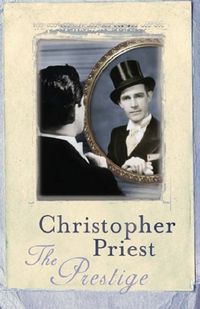
The Prestige This book intrigued me such that I recently bought a copy at SFO for the long flight back to the UK. It’s just been released as a second-rate motion picture. I haven’ t seen the film, but there’s a fascinating angle to the book for anyone involved with the professional speaking business.

The two main characters in this sensational Victorian melodrama are rival magicians whose stage acts provide entertainment in the Music Halls of nineteenth-century London. The book chronicles their careers. What’s fascinating is how much like the business of professional speaking today the business of the professional magician was then.

They have their professional associations, journals and tricks of the trade. E very magician preserves their tradecraft:

Magic has no mystery to magicians. We work variations of standard methods. What will seem new or baffling to an audience is simply a technical challenge for other professionals. (p.68)

They struggle in the early days of their career, learning to showcase their tricks as they learn to tolerate rejection by booking agents. They perform to small audiences where and when they find them. They bomb. They try again. They struggle to establish themselves:

The real problem with theatrical bookings is that while they pay well they provide no continuity. Each is at the end of a blind alley. I do my act, I take my applause, I collect my fee, but none of these ensures another booking. Even the reviews in the press are small and grudging. (p.172)

As today, the secret is finding a niche. It might be running seances, or assuming the character of a French scientist, or embracing the use of the novel aspects of electricity in an act. Their careers peak and they struggle to reinvent themselves. The demands are relentless:

A magician can never practise enough, because every moment spent will improve his performance. So I toil in my workshop…and rehearse until I feel sick with preparation. Although my skill with prestidigitation increases, sometimes, in my darker moments, I do wonder why I am continuing to rehearse at all. (p.210)

In the days before television and radio, the internet and mobile connected c0mmunications, these entertainers were the superstars of their day. Those who make their living on the podium today play to much diminished audiences. The volume of bookings, attention spans of audiences and desire for entertainment to be delivered in person were far greater for the Victorians. There were no requirements to turn off cell phones before a speaker came onstage, no glances at a Blackberry if the message was not compelling. Of course, limelight played havoc with your sinus condition and the demands of a roadtrip were just that.

If you want a ripping good yarn, pick up a copy of The Prestige.