How to use Google auto-complete to generate content

Google Auto-Complete
If you are stuck for a rhetorical question to use as a speech opening, or just want to see what is a popular about a topic, you can use Google to ask:

Why is [topic] so…

before pressing ‘Enter’ Google will kick in with an ‘auto-complete’ algorithm that predicts what you are searching for, based on how often past users have searched for a term.

The results are absolutely fascinating.

While Google might change over time, here’s the current results showing the first single word returned for a variety of places, people, pastimes and products that would be useful material for a speaker to comment on by noting that “People ask…I can tell you that in my experience…”:

Why is England so rainy
Why is Ireland so green
Why is Scotland so poor
Why is France so liberal
Why is the USA so hated

Why is New York City so big
Why is Dallas so boring
Why is Minneapolis so expensive
Why is Beijing so polluted
Why is the Equator so hot

Why is President Obama so arrogant
Why is John Lennon so influential
Why is Hitler so cool (!)
Why is Fox News so bad
Why is the BBC so good

Why is cycling so addictive
Why is chess so hard
Why is skiing so fun
Why is scuba diving so tiring
Why is cricket so popular

Why is sugar so addictive
Why is tobacco so popular
Why is lettuce so bitter
Why is Marmite so salty
Why is Vegemite so disgusting

Try it yourself and see. Simply enter the topic of your next speech into Google and let auto-complete suggest a word or phrase you can use as an opening.

Why is this so simple?

45 years ago today, a speech never given

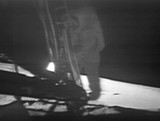
Apollo 1145 years ago today, on July 20 1969, Apollo 11 touched down on the surface of the Moon.

In advance of the mission, anticipating the risks involved, White House speechwriter Bill Safire prepared a speech to be given by President Nixon if the lunar module was unable to return to Earth.

Thankfully, this was a speech that was never given.

To: H. R. Haldeman
From: Bill Safire

IN THE EVENT OF MOON DISASTER:

Fate has ordained that the men who went to the moon to explore in peace will stay on the moon to rest in peace.

These brave men, Neil Armstrong and Edwin Aldrin, know that there is no hope for their recovery. But they also know that there is hope for mankind in their sacrifice.

These two men are laying down their lives in mankind’s most noble goal: the search for truth and understanding.

They will be mourned by their families and friends; they will be mourned by their nation; they will be mourned by the people of the world; they will be mourned by a Mother Earth that dared send two of her sons into the unknown.

In their exploration, they stirred the people of the world to feel as one; in their sacrifice, they bind more tightly the brotherhood of man.

In ancient days, men looked at stars and saw their heroes in the constellations. In modern times, we do much the same, but our heroes are epic men of flesh and blood.

Others will follow and surely find their way home. Man’s search will not be denied. But these men were the first, and they will remain the foremost in our hearts.

For every human being who looks up at the moon in the nights to come will know that there is some corner of another world that is forever mankind.

PRIOR TO THE PRESIDENT’S STATEMENT:

The president should telephone each of the widows-to-be.

AFTER THE PRESIDENT’S STATEMENT, at the point when NASA ends communications with the men:

A clergyman should adopt the same procedure as a burial at sea, commending their souls to “the deepest of the deep,” concluding with the Lord’s Prayer.

Speechwriting — Success Behind the Podium with Barbie Tootle

Barbie_TootleBarbie Tootle is President of Left Field Consulting, which provides freelance writing services, consultation in communication strategies, and training in creativity and personal development. She researches and writes speeches for CEOs and senior officers in the corporate world, non-profits, and higher education. Barbie also writes scripts for large events and videos. She is story editor and researcher on the documentary film Song of the Soul: Stories of Hospice in South Africa.

For 15 years, Barbie was Director of Special Projects and Special Assistant to the President of The Ohio State University, working for three presidents. She spent a dozen years in student affairs after receiving a bachelor’s and a master’s degree from Ohio State. Barbie has delivered hundreds of keynote speeches and facilitated hundreds of workshops and training sessions around the country.

Barbie is a member of the Board of Directors of The Ohio State University Alumni Association. She served as president of the Board of Trustees of Thurber House and volunteers in the Ohio Historical Society’s 19th-Century Base Ball Program. She is left-handed and shares a passion for baseball with her husband Jim, a baseball historian.

In this TEDx talk that was given at Ohio State University, produced independently of the TED Conferences, she discusses some of her speechwriting guidelines.

NY Speechwriters Conference Debrief 3 of 3

Part threeIn this third and final edited highlight of the Silicon Valley Speechwriters Roundtable conference call from the PSA World Conference, I give a summary of Bob Lehrman’s break out featuring a conversation with David Kusnet who was Clinton’s speechwriter. Katie Gray shares admiration for General David Petraeus’s intellect.

Brian Jenner shares Eric Schnure’s tips on writing for roasts and why it’s important to “singe not burn” and ways jokes can be reused. Schnure recommended writers do a “joke dump” and write 10 jokes for every one used. A good way to structure a joke is by associating a person or place in the news with a different issue. CEOs can get away with humor if they introduce it by saying “As Jon Stewart said…”.

To hear the audio, click on the podcast icon below.

NY Speechwriters Conference Debrief 2 of 3

Part TwoIn this second edited highlight from the call, social media director Jerry Weinstein reviews postings to the tweet-stream under the #PSAworld hashtag. He discusses the unusual nature of the opening keynote that took people out of their intellect into a bodily appreciation of what is involved in the act of speaking. He comments on the “Know your Worth” breakout session with Fletcher Dean, Julie Conway and Harry Kruglik and the relevance of salary surveys in journalism which might be valuable for speechwriters to initiate. Likewise, in a parallel breakout, Gotham Ghostwriters founder Dan Gerstein addressed the value of freelancers sharing rate information.

Duarte Design content developer Katie Gray was attending her first ever speechwriters conference and was impressed by the variety and cross-section of presentations. She liked the mixed media content of Mette Højen’s presentation on the ways speechwriters can command audiences exactly like an orchestra conductor.

David Murray explains why he chose an experiential opening keynote from Edmée Tuyl. He explains that it’s easy to find tips on the basics of speechwriting which he assumed most attendees at this event knew. He wanted to encourage people to share experiences, with someone who talked about speechwriting on a holistic basis. He discusses the closing keynote by General David Petraeus was himself a speechwriter for General John Galvin, Supreme Commander of European Forces. Petraeus demanded the right to be present every time the General spoke and to be in the car on the way to the event to get the boss fired up before stepping onto the podium.

To hear the audio, click on the podcast icon below.

NY Speechwriters Conference Debrief 1 of 3: David Murray

Part OneThe Silicon Valley Speechwriters Roundtable conference call took place May 21 at the end of the first day of the Professional Speechwriters Association (PSA) World Conference held May 22-23 at New York University.

There were 9 callers online from around the country. The Roundtable is open to anyone who is interested in speechwriting in Silicon Valley, not just those of us who live and work there. The call lasted 45 minutes, and I’ve divided the audio recording into three segments.

In this first of three edited highlights David Murray, the organizer of the Conference, discusses the mood of the event. In contrast to the 200-person Ragan Speechwriters Conference in Washington DC which attracts generalists, this event was targeted specifically at practicing professional speechwriters—over 50 attendees came from Europe, USA and Canada. David gives a preview of the review sessions that will occur on the final day of the event. He concludes by describing advantages of becoming a member of the newly formed Professional Speechwriters Association.

Brian Jenner of the UK Speechwriters Guild attended the 2008 Ragan Conference and saw first-hand the differences between British and American approaches to speechwriting and was inspired to found the UK Speechwriters Guild. The interest of other Europeans led to the European Speechwriters Network holding their first conference in 2013. He claims that this event has made him realize the differences in style between speechwriters and the “hippie tendencies” of some people who make their living as speechwriters!

To hear the audio, click on the podcast icon below.

Hollywood Secrets Help Professional Speakers

Over 100 attendees at Saturday’s meeting of Northern California Chapter of the National Speakers Association heard the benefits of taking a Hollywood approach to writing and delivering presentations in order to elicit emotion in an audience.

FrippHall of Fame keynote speaker and executive speech coach Patricia Fripp joined forces with Hollywood story expert (and Will Smith’s script consultant) Michael Hauge.

Fripp is the founder of our Chapter and a leading authority in the world of professional speaking.

Michael HaugeHauge is a story and script consultant, author and lecturer who works with writers and filmmakers on their screenplays, novels, movies and television projects. He has coached writers, producers, stars and directors on projects for Will Smith, Julia Roberts, Jennifer Lopez, Kirsten Dunst, Charlize Theron and Morgan Freeman, as well as for every major studio and network.

Michael also works extensively with Hollywood executives, producers, agents and managers, helping them sharpen their story and development skills, and improving their companies’ abilities to recognize powerful material, employ advanced principles of structure, character arc and theme, skillfully communicate a story’s strengths and weaknesses, and work effectively with writers to achieve a commercially successful screenplay. His skills and experience were immediately applicable to the professional speakers and speechwriters in the room on Saturday.

Fripp introduced the program by saying it is difficult to be creative in isolation, hence the collaboration between her and Michael that enables their creativity to flourish. She stated that to ensure your audience remembers your presentation you must present information in a way that it connects with them by following a basic story outline formula: When? Where? Who? What Happened?

Michale Hauge elaborated on this by outlining:

The 10 Essential Elements of Every Great Story

  1. A Hero. The story must have a hero or heroine. This main character drives the story and has the potential to be heroic. The hero’s desire propels the action.
  2. The Setup. A slice of everyday life before anything heroic happens. It shows how the hero is stuck before they begin the “forward movement” of the story. This is where the writer builds sympathy for the hero in the minds of the audience, which leads to:
  3. Empathy. A psychological connection between your audience and the protagonist before you reveal the hero’s flaws. The audience lives through the characters and empathize with them by seeing the highs and lows they deal with in their lives. Hauge shared three ways to create empathy:
    1. Create sympathy. Make them the victim of an undeserved event.
    2. Put the hero in jeopardy. In Raiders of the Lost Ark Indiana Jones escapes a host of threats at the start of the movie that have nothing to do with the rest of the plot, but develop empathy for Jones.
    3. Make the character likeable, kind, good-hearted, generous.
  4. Opportunity. When something happens that has never happened before and gets the story moving.
  5. New Situation. To allow the hero to pursue a visible goal they want to accomplish.
  6. Outer motivation. Or the visible goal that the hero wants to accomplish by the end of the story. This goal must be within the hero’s power to accomplish. As a story coach, Hauge asks “What’s this story about?” In the movie, Gravity, the heroine’s goal was, “I want to get home.” This outer motivation should be easily expressed in a single sentence. The clearer you can be about the visible goal of the hero, the better.
  7. Growing Conflict. A great story provides obstacles for the hero to overcome. To elicit emotion, you must amplify conflict. Whatever goal the hero wants to accomplish, you must convince the reader it’s impossible and then find a way to achieve it.
  8. Climax. At this point of the story the hero confronts the biggest obstacle that must resolve their visible goal. But it’s not the end of the story.
  9. Transformation. The hero must transform to achieve their outer motivation. In a character arc, this transformation is the point when they go from living in fear to living courageously. This element reveals the story’s theme and reveals universal meaning, which increases emotion and story depth. The visible goal can only be achieved if the character can overcome the state of being stuck.
  10. Aftermath. The final element shows the hero living a new life after completing the journey.

Hauge gave each of us a bookmark with these elements listed.

Michael Hauge Bookmark

Soundbites

All great presenters speak in easily Tweetable soundbites. Here’s some I noted:

Michael Hauge:

  • Real life is not properly structured
  • Stories must be true, but they don’t have to be factual.
  • Audiences don’t want to hear that you became courageous; they want to hear how it happened.
  • Whatever you want your audience to learn and do, you must have the hero of your story learn and do.
  • Stories give your audience a direct experience of whatever it is you want your speech to convey.

Frippicisms:

  • Freeze your gestures while the audience laughs or applauds.
  • Deliver stories that happened in the past in the past tense.
  • The audience does not see how you feel, only what you project.
  • You are speaking for the audience of your audience.

Resources

Hauge illustrated his concepts with movie references. He started the morning by sharing a clip from the movie “Hitch”. If you’ve never seen this romantic comedy, take a look:

Hauge’s books on the craft of screenwriting and storytelling are best sellers in the genre. I went home with two of his books and an audio CD:

Fripp has launched a Virtual Training website where you can immerse yourself in her speech and sales presentation coaching 24/7.

Same Same … But Different

SameA recent discussion in the National Speaker’s Association Facebook Group addresses the problem of the lack of originality in many speeches. The discussion was prompted by a LinkedIn article by Richard A. Moran which highlights the repetitive use of the same case studies by speakers at business events. The author requests:

Let’s broaden the conversation and stop talking about the same companies – usually Apple, Zappos and Southwest Airlines.

Instead of the same old stuff he wants:

…to be motivated, not sorry I don’t work somewhere else. I want to know how I can improve, not how a brilliant leader did it a few years ago somewhere else. And, I want genuine advice that might include some practical tips about how to be better and what pitfalls to avoid.

Professional speakers and speechwriters are in total agreement. Their comments show they understand the importance of delivering content that is unique, different, and ensures their message will be heard above the noise. (Since the NSA Group is a closed one, the names of the contributors have been removed.)

  1. The problem is a global one – same old stories, same old case studies, same old messages. We need to use our own stories, our own research, and if we must talk about companies, use current news stories.
  2. It’s best to tell stories from our own experience. It’s what I do in my own talks and it’s what I encourage executives to do when I’m helping them with their speeches. Not only are those stories going to be original, the speaker is going to be more connected to them.
  3. Speakers must bring us a very different idea or way of doing something we’ve not heard before. I can honestly say few exist per my life’s experience. The same ingredients in a food processor still yield pretty much the same outcome–no matter what order you add them. Real Thought Leaders make us think long after the book, podcast or event. I believe great speeches have a beginning, a middle and a definitive end. I also know there are three presentations happening simultaneously: the one you planned, the one you executed and (most importantly) the one they take away. Our own stories and the lessons we share keep our content fresh and unique, as long as we continue to study how to connect the dots in a way the audience most relates to.
  4. As a speech writer for others, I want to take their experiences and create a speech based on them, not on what can be found in college business textbooks. Not all case studies are as they seem.
  5. We live in an age where everything changes quickly — we have so many examples to share.

Book Review: Cold Cream, by Ferdinand Mount

Cold Cream CoverA memoir by a shy and retiring British aristocrat with the unlikely title Cold Cream: My Early Life and Other Mistakes would not usually grab my attention, or warrant a review in this blog.

However, Ferdinand “Ferdy” Mount’s autobiography is a delightful book filled with tales of a vanished world. He grew up a member of the British upper class. His family was never wealthy, but he was in line for a Baronetcy and they had enough money to send him to private schools and on to Eton and Oxford. Throughout his life, relatives, friends and acquaintances saw to it that Ferdy was alright. His career required “the oxygen of influence” from members of the Establishment who take care of their own. After working as a children’s nanny and gossip columnist, he did a stint as a leader writer on the now defunct newspaper the Daily Sketch. Following his time as a newspaperman, Ferdy then spent a few haphazard years assisting various Conservative Party politicians with reports and considered running for Parliament in a half-hearted way.

Margaret Thatcher

Then, out of the sky blue yonder, on p. 281 of his life story, the phone rings:

By the time Margaret Thatcher became Prime Minister I had long ago abandoned any thought of a political career and had happily settled for a life of writing anything that came to hand or mind. So it was a total surprise when her economic adviser Alan Walters rang up on 3 March 1982 and asked whether I would care to come and work for her.

He’s offered the job of running the policy unit and Number Ten Downing Street.

Mount comments “…I had never run anything and had zero experience of the workings of government.” Not a concern to the Iron Lady.

It transpired on meeting Mrs. Thacher that there was a fundamental misunderstanding: he thought of himself as a policy wonk, she hired him as a speech writer. Oh well, thinks Ferdy, “…I suppose many marriages have started on a worse basis.”

His description of life inside Number Ten is astute and hilarious. The strategic position of the gents loo allows cabinet ministers respite from their colleagues. He details where Dennis Thatcher keeps his golf clubs, how the residence of the Prime Minister was accessible via a back stairway where he could slip last minutes notes in the PM’s briefing boxes late at night, where the Downing Street cat sleeps. He confirms the accuracy of the way the Civil Service is portrayed in the BBC series Yes Minister.

Speechwriting at Number Ten

Mount reveals the “full horror” of the speechwriting process in preparing for major events.

The first draft I served up was there simply to be torn up and binned, while she began to think what she might actually want to say.

Politicians would submit jokes for his consideration. They were ignored.

Eccentric members of the ruling class would offer suggestions for speech content, including one who “sported a thin Mafioso moustache and grubby tennis shoes under a pinstripe suit (who) claimed to have a squad of West Indians on roller skates whom at a moment’s notice he could despatch all over London to find out what word on the street was…”

In addition to speech content, Mrs. T. needed coaching in delivery:

Her ear was unfailingly tinny and, though she could be devastating and inspiring in unscripted harangues, the sight of a written text would make her freeze. Even though the words might have been of her own devising…at first reading they would fall lifeless from her lips.

A “portly, fruity” playwright “redolent of the old West End” was there to advise on delivery:

‘Come on, darling, they want you to show you really feel it.’ She would look at him, bewildered but dutiful, the novice on her first engagement in rep.

Preparing her address to the annual Conservative party conference in a year when she was not challenged for leadership (that would come later) bemused Mount. Thatcher spent 18 hours preparing “for the one speech in the year in which she was assured of receiving a rapturous standing ovation.”

The final version of the speech contains none of his “smart phrases” but has the conventional “more direct, brutal way of putting things that she felt comfortable with.”

He acknowledges that speeches like this are where politicians focus their energy because they are about the “mechanics of getting and holding power.”

The humble manner in which Mount tells of his time in the corridors of power make this a delightful read and a lesson in the many ways speechwriters can function. Recommended.

Why corporate storytelling sucks

Andrew HillA provocative article by Andrew Hill in Tuesday’s FT skewers the current focus on storytelling in executive communications blogs (like mine!).

Hill notes that companies like Microsoft and SAP have people on staff with the title “chief storyteller”. He dismisses the interview that Steve Clayton conducted as a walkabout with Microsoft CEO Satya Nadella as “anodyne”.

Moving on, he highlights the danger that corporations will construct unrealistic myths with a “a coherent plot…no implausible twists, or awkward gaps” to tell the story of their success which leaders then become trapped in. The risk is, he claims, that corporate storytellers start to believe their own stories.

I’d argue that while there’s some truth in Hill’s admonitions, he over-eggs the omelet in criticizing the desire of communications professionals to tell stories. To achieve even a modicum of success in this endeavor is something to applaud. As welcome relief from the endless march of PowerPoint slides displayed in meeting rooms worldwide, a real story is a rare treat.

The Heart of Storytelling

In fact, I’ve noted that a previous Microsoft storyteller, Justina Chen, has described in detail the messy, complex and conflictual nature of telling the story of the Xbox team who had to deal with games consoles catching fire and other challenges on the road to success. Chen, a successful author who knows what captures the imagination, recognizes the power of overcoming adversity in telling a good yarn:

Don’t be afraid of discussing failures, the crucible moments in the company history is where we see character emerge. Speechwriters can research the times the company has failed and show the lessons, the backbone, and the spine of the organization…

Of course, no company is going to write the corporate equivalent of a Bleak House, or a Gormenghast. When our daily bread is at risk we prefer tales of success to dystopian failure.

Propaganda

WWI PosterIndeed, I believe Hill’s critique is more appropriate if broadened to encompass the similarities between modern corporations and authoritarian regimes or even Fascist states. There’s the common themes of veneration of the organization over the individual, devotion to a strong leader, perpetual competitive engagement as a key motivator of “the troops”, and a fevered dedication to territorial (or market-share) expansion. Propaganda is employed as a tool of conformism and control.

Hill’s critique of “happy ending” storytelling is a really critique of corporate propaganda. Many specific propaganda techniques are deployed by corporate PR and communications professionals: the tireless repetition of an idea, appeal to fear uncertainty and doubt, jumping on the bandwagon, inevitable victory, black and white choices, the cult of personality, demonizing the competition…and so on.

Transmedia

Hill acknowledges the positive origins of corporate storytelling in the work of Stephen Denning. He also references John Hagel of Deloitte’s Center for the Edge (where U2’s guitarist hangs out?) who has suggested:

…it may be healthier to think of business stories as open-ended narratives in which everyone participates, rather than finite tales told by a single raconteur to a passive audience. But he points out that “narratives cannot be crafted by PR departments [and] existing institutional leaders are generally poorly equipped to take on this opportunity”.

When highlighting the importance of context and narrative, Hagel points to the democratization of the means of production of stories:

Digital technology provides all of us the ability to define and communicate narratives in rich and textured ways. Video and audio tools and platforms supplement conventional text-based forms of communication, and put them in the hands of everyone. Of course, the democratization of communication poses its own challenges. While it helps us to frame and communicate our own personal and institutional narratives, it makes it more challenging to frame social narratives that can unite rather than fragment us as we seek to learn faster by working together.

This is supported by my own experience at companies like Cisco where an internal YouTube-like service allows all employees to tell stories. This “show and share” initiative opens the floodgates to immersive storytelling and transmedia where not only the Führer, or CEO, is the focus of the story.

Authenticity

At the end of the day, Hill admits, it is a question of the authenticity of business leaders’ communications, which face innumerable barriers. With Dilbert filling George Orwell’s role in satirizing authoritarian empty suits, the time for “writing with courage and character and grit” is now. But that’s the focus of the column to the right of Andrew Hill’s on p.8 of the March 18 FT.