 This is the keynote address by Rod Thorn, Communication Executive, PepsiCo that was delivered at the Ragan Speechwriters and Executive Communicators Conference, George Washington University, Washington, D.C. on March 10, 2015. Reprinted here with his express permission. It is an amazingly honest and forthright assessment of what is like, on a professional and emotional level, to work with CEOs. I found every word rang true to my own experience as a speechwriter and recommend everyone who is an adviser to executives read it. Follow Rod on Twitter @Rodthorn.
I want to take you on a journey today. The journey of a dirt poor kid who started his life in a trailer, then became a trusted advisor to CEOs, flying all over the world in corporate jets.
This is my story.
And while I may not quote Alexis de Tocqueville, I WILL tell a tale of democracy in America.
To begin, I ask you to travel back in time with me about 45 years, and step into the trailer I grew up in. It’s a used New Moon Hallmark; 10 feet wide, by 40 feet long. It’s on a dirt road, way out in the country, in upstate New York.
My father and mother are very poor. They’re not blue collar. They’re no collar. And somehow they cobble together enough money to buy this trailer. Not a double-wide, mind you, but a 10-wide. A double-wide is for rich people who are showing off. And if you have a house, well, then you’re royalty.
One day, two neighbor boys, three and four years older than me, knock on our door. I’m home alone, which is often the case. The boys tell me to follow them because they have something very important to tell me. They are bigger and older than me so I do as I am told.
When we enter their house they say, “Pay attention, because we’re going to teach you seven of the most important words you’ll ever know. After we say what they are you need to practice ‘em so you’ll never forget ‘em. Got it?”
I nod yes, and I am wide-eyed with anticipation. They have a HOUSE. They are OLDER than me. And they are giving me ADVICE. This is my entry into the big boy club!
And that’s when they tell me the seven words that got the comedian George Carlin arrested and thrown in jail for public indecency. The boys don’t tell me these are DIRTY words, only that they are IMPORTANT words. I’m not going to say what these words are, despite the fact that I seem to have grown so fond of them. But I can tell you this . . . one of them sounds an awful lot like you were taking your mother to the hamburger chain, Fuddruckers.
Anyway, I run back to the trailer, saying the words over and over.
I get a piece of paper and a pencil, and I write out the seven words. My tongue is sticking out of my mouth. I’m really concentrating. I’ve got to get these words right.
My mother comes home. She says, “Whatcha’ doin’, honey?”
I say, “The boys across the road taught me some words so I’m practicing them.”
She says, “Oh, that’s nice. What words?” And she looks over my shoulder.
The next thing I know my very angry mother marches me back across the road.
She knocks on the door. The mother answers. The boys are peeking out from behind her. My mother says, “Your boys just taught my son these words!” And she angrily thrusts the paper I was writing on at the mother, who takes the paper, looks at it, and says to her sons, “Did you teach him these words?” They say no, they don’t know what he’s talking about, pointing at me. Their mother shoves the paper back at my mother and, using a couple of the seven words her sons taught me, says, “Your boy’s nothin’ but a no-good liar” and slams the door in our face.
Back at the trailer, my mother tells me these are very bad words. I am never to use them, and I should forget I ever heard them. She’s not mad at me, she says, and I didn’t do anything wrong. She’s just . . . concerned.
Many years later she told me that in that moment, she realized how big of a hill life was going to be for me, and that she had no idea where to begin to help me make the climb.
She only had a seventh grade education. She was one of eight children. She grew up poor, and then it got worse when she married my father. But she was determined to use whatever she could get her hands on to teach herself. And what she could get her hands on was books.
So here’s what she does: She pulls out a dictionary, and we begin a daily lesson that will last for many years to come. We read the dictionary together. Every day, pick a word, use it in a sentence. Recite its meaning. Pass it back to my mother, who does the same. And we constantly play Scrabble.
In my entire life—despite getting a degree in Rhetoric and Communications from a very good school, becoming a playwright and author and corporate executive—I only beat her at Scrabble once. And that’s because she let me.
But on that day, she says we won’t always have to live this way. We won’t always be surrounded by, “drunks and druggies and hoodlums and lying, good-for-nothing, violent people. People you can’t trust as far as you can throw them.”
What she says next is not as much advice as it is a commandment: “Words have the power to hurt and to heal. If you want to live a life that matters, and become a person that people can TRUST, you will use your words as a force for good.”
I’ve been trying to do just that, and make my mama proud, ever since.
***
Now, let’s leave that trailer and fast forward—to my first ride on a corporate jet. If you’ve ever flown on one and then had to go back to flying commercial it’s like dying and going to Heaven, and then having to reenter your body on the operating table.
This is truly rare air.
A limo picks me up, takes me directly to the plane. Someone takes my luggage, I walk up the stairs. The pilot and co-pilot greet me at the door. A flight attendant, who doubles as the flight engineer, shows me around the plane. I try to act like I’ve been there before.
I am surrounded by power and influence. There’s polished wood and fine leather. There are lamps. There’s an antique rug. There’s a conference table, big enough for Thanksgiving dinner. There’s a bedroom with a shower. There’s a private office. There’s a kitchen. There are huge televisions with every channel and movie you’d ever want to watch. This is bigger and nicer than the trailer I grew up in. The people are so polite. And it has much better food.
My CEO motions for me to sit across from him. I’ve worked for the company for a while. But I’ve never been on the plane with him.
There are several other executives on the plane. And they seem to me a little smug, and a little suspicious of my presence. I’m an outsider. I’m a newcomer. And I’m not in the inner circle.
After some small talk we take off, and my CEO tells me we will make a sharp ascent because the pilot used to fly fighter jets and he likes to get to 41,000 feet as quickly as possible.
I nod as if I already know that.
After the flight attendant brings drinks and a snack for us my CEO leans forward, looks out the window, and says, “You know, when you take this job the bullet that gets you has already been fired. The only question is how long will it take to reach you?”
I am floored. I don’t need any help breaking out in a flop sweat. And now a sniper’s going to take me out!?
Next, I hear him saying words and sentences but they’re all gauzy and muffled, like one of the parents in a Peanuts cartoon saying, “Whah, whah, whah, whah, whah, whah.”
Then he says: “And that’s why I need someone I can trust to advise me. Not just to write for me. I can get anybody to do that. I need someone to be my second brain. An extension of me. A strategic thinker AND a tactician. Someone who will tell me the truth. Someone who has my best interest in mind, AND the best interest of the company.” And then, finally, he says: “Someone who can keep that bullet from reaching me.”
Bang. This flashes into my head: “The bullet’s going to hit HIM, not me! This is AWESOME!”
So I’m relieved. But at the same time, I’m confused. He’s the CEO. And he’s worried about who is going to take HIM out?
I lean back in my seat. I flip open my laptop. And I act like what just happened is no big deal. But it is a VERY big deal. It’s so big . . . I cannot concentrate on a single thing.
Because, my fellow speechwriters, I’d finally reached my destination. I was using my words as a force for good. And I was becoming a trusted advisor.
Before I go on I’d like to say something that is very hard for me to admit. Back on that corporate jet, staring into my laptop, there was a very big part of me that does not believe I belonged in such rare air. In fact, I feel it right now.
There is a voice inside of me—sometimes very loud and persistent—that says, “Who do you think you are to give advice? What makes you think what you have to say is important to anyone? You’re a fraud, you’ve somehow tricked these fine people into thinking that you are somebody, and one day they will all find out that you’re faking it. Then, you’ll be back in that trailer, right where you belong.”
That voice is the thing that makes me sweat with anxiety when I’m up here. That makes me short of breath. That makes my voice quiver with fear. That makes me almost quit—every single time—when I’m writing a play or a book or a speech.
You see, despite the facts—I am a communications executive at a 67 billion dollar company; I have written for and advised dozens of CEOs and hundreds more senior executives at Fortune 100 companies; I am a member of the Paley Media Council, the Professional Speechwriter’s Association, and the Dramatist’s Guild; I have written several books and had more than 25 productions of my plays; I have spoken at Dartmouth and Columbia and other universities; I have a degree from a fine university, where I also played football and baseball, and was even the lead singer in a band—I can be insecure and wonder why CEOs let me write speeches for them or consider me to be their trusted advisor.
In my mind, CEOs are different than me—by CEO I mean anyone who is in charge of an entire organization where they are the sole, accountable individual.
In my mind, CEOs grow up wealthy, with big houses, new cars, country club memberships, private schools, and European vacations. They go to Harvard and Yale and have MBAs and degrees in economics. They know what fork to use. They know what to wear for different occasions. They drink wine, not beer. They say EYE-ther and NEY-ther instead of EE-ther and NEE-ther. And they live UPSTAIRS at Downton Abbey, not downstairs.
In reality, CEOs are HUMANS just like anyone else. They have many of the same insecurities and voices in their heads. They might not admit it in public, but in private—in moments I’ve had with so many of them in board rooms, in green rooms, and on those company jets—they share many of the same things I’m saying here.
And I know it’s not just my experience.
I was reading the Harvard Business Review the other day and I saw an article called, What CEOs Are Afraid Of. It was by a consultant in the UK named Roger Jones, who had surveyed and interviewed 116 CEOs. In the article, Jones states, “Deep-seated fears — of looking ridiculous, losing social status, speaking up, and much, much more — saddle children in the middle school lunchroom, adults on the therapist’s couch, and even, my research has found, executives in the C-Suite. While few executives talk about them, deep and uncontrolled private fears can spur defensive behaviors that undermine how they and their colleagues set and execute company strategy.”
While I feel bad for these CEOs, this was a confirmation of what I’ve been experiencing with CEOs throughout my career.
What’s more, what Jones found about executives’ fears and their impact in the boardroom was revealing, and in some cases astonishing. For instance, the biggest fear among CEOs was being found to be incompetent, also known as the “imposter syndrome.” This fear diminishes their confidence and undermines relationships with other executives. Their other most common fears, in descending order, are underachieving, which can sometimes make them take bad risks to overcompensate; appearing too vulnerable; being politically attacked by colleagues, which causes them to be mistrustful and overcautious; and appearing foolish, which limits their ability to speak up or have honest conversations. About 60 percent said those first three fears affected behaviors on their executive team, although 95 percent said that executive team members had a very limited view of their own fears. About two-thirds believed they had “some” self-awareness.
The five top fears resulted in these dysfunctional behaviors: a lack of honest conversations, too much political game playing, silo thinking, lack of ownership and follow-through, and tolerating bad behaviors.
When they were asked to think about the fallout from those dysfunctional behaviors, the executives mentioned more than 500 consequences. Those mentioned most frequently were poor decision-making, focusing on survival rather than growth, inducing bad behavior at the next level down, and failing to act unless there’s a crisis.
Makes you wonder why anyone in their right mind would want the job, right? Or why anyone in their right mind would want to be their trusted advisor!
But it’s not all fear and loathing in the corner office. CEOs also get to see people grow and reach their potential. They get to see teams come together and accomplish great things. They get to influence their customers’ success. They get to go to their employees’ most important family events. They get to watch their teams let their hair down, and begin to trust each other. They get to feel the satisfaction when the company reaches a milestone. Most importantly, they get to help build something in this life that might just change the world.
Still, given all of the fears and insecurities that CEOs have to deal with, is it any wonder they need someone they can trust?
That’s why people like us are so important to them. Because we provide far more than JUST Words.
Let’s go back in time again. I’m about 17 years old. Getting ready to go to college.
Remember the two knuckleheads who taught me the seven dirty words? They’re not going anywhere, and they’re getting in even worse trouble. As my “trusted advisors” they’ve been replaced by my Uncle George. A man who, despite growing up with even less than I had, despite having no education to speak of, despite being in and out of juvenile detention homes, becomes a very successful business executive. Not a CEO, but pretty close.
One day he visits us and gives me some advice about working, and about life, that has served me well in working with CEOs. Instead of seven dirty words, he gives me seven things I need to be. If you’re looking for the best advice I can give on how to be a trusted advisor, this is it.
Number one, be versatile. Or as my Uncle George said, “Be ready for anything.”
Think about all of the people CEOs encounter in the course of their work: Employees, customers, shareholders, the media, the investment community, partners, foreign and domestic governments, NGOs, community groups, activists, and competitors.
Whoever they are dealing with, CEOs know that everyone wants something from them. They want funding for their project. They want to be hired. They want to be promoted. They want a deal. They want a greater return on their investment. They want a story. They want to call themselves strategic partners. They want tax revenue. They want regulations. They want donations and volunteers. They want to use your name—on books, in articles, videos, speeches, on buildings, in parks, on legislation, you name it.
Everyone wants a piece of the CEO. They WANT, they WANT, they WANT.
So to be a trusted advisor, YOU have to play many roles. Besides writing speeches, op-eds, briefs, videos, letters and more, at any given time you are a lawyer, diplomat, bodyguard, confidante, salesperson, psychologist, nurse, lobbyist, researcher, media expert, spokesperson, and strategist.
And you are the only person who isn’t trying to get something from your CEO.
So to be a trusted advisor, you need to be versatile. And ready for anything.
Number two, be humble. Or as Uncle George said, “Lose the ego, Bub.”
Today on the train ride down here I wrote a letter to a Boy Scout, and a brief for an economic summit in Europe. Next week I may stay in a five-star hotel, and then shine my CEO’s shoes. And that’s just fine with me.
At one company I worked for the chief marketing officer blatantly used the company to promote himself and his career. He gave speeches everywhere. Wrote a book, well, HE didn’t write it. This guy made horrible marketing deals that cost MILLIONS of dollars the company could not afford. He made deals that got him on network television with Donald Trump. And he loved to get his picture taken with porn stars. And through it all, he somehow convinced this very smart CEO that it was all for the good of the company.
This, as you might expect, did not end well. Because let me tell you something—the last thing a CEO needs is someone who wants the limelight more than they do.
So to be a trusted advisor, you need to be humble. And lose the ego, Bub.
Number three, be flexible. Or as Uncle George said, “Be willing to do what others won’t . . . or can’t.”
About 15 years ago I worked for the CEO of a major technology company. One day I was told to drop whatever I was doing and handle a crisis. This kind of thing happens all the time. But in this case, the crisis was all day, every day, for nine months. Of course I couldn’t drop everything else to solely deal with this crisis. But it certainly became my priority.
I can’t give too many details. But here’s what happened: A disgruntled genius and former chief information officer of a major utility was using my company’s information systems and technology to essentially hold the utility hostage. Unless his demands were met, he said he would initiate phony work orders on the utility’s nuclear facilities and cause meltdowns in major metropolitan areas.
It’s like a James Bond movie, right?
Since this guy designed the entire IT structure of the utility he knew how to make good on his threat. And from time to time he would prove it. Then stop short of actually going through with it.
Every day I had to talk with the FBI. With the Nuclear Regulatory Commission. With my general counsel. And of course, every day I had to brief my CEO. I also had to go to secret meetings with the utility company’s CEO, and HER trusted advisor, who in this case, was her general counsel. This is while beefy security guys stood by the door wearing sunglasses and talking into their wrists. It was a bit unnerving. But it was part of the job.
So . . . to be a trusted advisor, you need to be very flexible. And be willing to do what others won’t, or can’t.
Number four, be curious. Or as Uncle George said, “Ask questions. Poke your nose where it doesn’t belong. Keep learning.”
For example, a few years ago I wrote a book for a CEO who invented, among other things, motorized wheelchairs, motorized lifts and ramps on buses and vans, and hand controls for driving. He had a very successful company—out in the middle of a cornfield in Indiana—that he created out of necessity. At the age of six he was told he wouldn’t live to be 13 due to Muscular Dystrophy. This was back in the 1950s. If you couldn’t walk you were hidden away. Kept out of sight due to some kind of misplaced shame.
To make a long story short, he created an entire industry because he refused to hidden away. He didn’t live to be 13. He lived to be 74. And had several grandchildren. Today, thousands, if not millions, of disabled men and women have the freedom of mobility because of him. And because of his work with wounded warriors, military jets fly over his house and wave their wings at him in respect.
I wouldn’t have known any of that if I hadn’t spent a summer living on his alpaca ranch in Indiana, over his barn full of mating alpacas, digging into this man’s history, and having some very uncomfortable personal conversations—at least they were uncomfortable for me.
So to be a trusted advisor, you need to be curious. And poke your nose where it doesn’t belong.
Number five, be strategic. Or as Uncle George said, “Think about how everything affects everything else.”
At one point in my career I was working for a huge and well-known company that was trying to make a comeback from a corporate near-death experience. Among its many challenges, the company’s culture was badly in need of an overhaul. In particular, its salesforce was set in its ways and being outsold by far lesser companies. My CEO asked me to put on my thinking cap and figure out what I could do to address this situation. No speech would do. No email. No video.
So I created a brainstorming event that brought the company’s top 500 salespeople in from all over the world for three days. I made them take off their shoes. Draw with crayons. Play with blocks. Eat granola bars. You name it. I even banned white shirts, and ties. And these were people with billion-dollar quotas so pulling them out of the field was a HUGE deal.
To get backing for it I pitched the CEO and her senior leadership team. About 10 people. All middle-aged men. When I was done with my pitch the CEO asked her senior leaders what they thought. She was non-committal. Didn’t give them any indication of what she thought. To a person, they openly said how stupid the idea was, how it was doomed to fail, and how I had wasted their time. I was as nervous as a long-tailed cat in a room full of rocking chairs.
After a silence that seemed to last forever, my CEO said, “Well, I think it might work. We need open minds and new thinking. Especially in this room. And this doesn’t just change the way we sell. It affects everything we do—from research and development, to customer insights, to manufacturing . . . everything.”
One by one every executive in the room then quickly said, “You know I think you’re right! It just might work!” Inside my head I used most of the seven dirty words. But on the outside, I smiled, said thank you very much, and then got the hell out of Dodge.
So . . . to be a trusted advisor, you need to be strategic.
Number six, be thorough. Or as Uncle George said, “Pay attention to the little things. Leave no stone unturned.”
At one company my CEO told me to think about what we could do to combat a very influential and vocal critic of our business. This critic was a best-selling author, Harvard professor, and very well-known public speaker. We at least needed to get him to stop bashing us so much in the press, in his books, in speeches, and in his classes. Everywhere he had a platform. Our hope was to educate him enough about our business so he could be neutralized.
I researched everything about him. Read all his books and articles. Watched his speeches. Pored over everything he said in the press. I even figured out who was influencing HIM, and started courting THEM. I sent emails. I called. I visited. I got him together with my CEO for private briefings. I brought him to a product launch. I even brought him to my company to speak to our employees, most of whom DESPISED him for what he had been saying.
It turned out that he was criticizing our business based on information that was at least three years old. And that one of the people who was influencing him was a former executive at my company who had an axe to grind.
Somewhere along the line, someone hadn’t been thorough enough to bring this guy along in his understanding.
It took about a year and a half. And ultimately, this very influential critic became a very influential advocate.
So . . . to be a trusted advisor, you need to be thorough. You need to leave no stone unturned.
Number seven, be trustworthy. Or as Uncle George said, “Live a life that is WORTHY of trust.”
Being a trusted advisor is not something you declare. It is not an entitlement given to you because of your title, or because of your seniority. It is something you EARN. And it is something you can lose in an instant.
Case in point: I was working for one of the world’s foremost experts on traumatic brain injuries. A doctor at a prestigious university who had been hired by all the major sports leagues to figure out how to reduce concussions among their athletes.
I have him speaking at conferences. Writing articles. Doing media. Things are going great.
One day he shows me a photo of a mouse in his lab who is wearing a tiny football helmet. The doctor says he has a device that whacks the mouse on the head and causes varying levels of brain injury. Then the doctor measures it. Contrasts the results with the thickness and design and material used in the little football helmet. Produces reports. Advises the leagues and manufacturers.
Sounds horrible and intriguing at the same time, doesn’t it? Causing little mouse concussions? In my journalistic zeal I pounce on the story. I tell it to a MAJOR newspaper and I give them the photo. They immediately run it, and the photo. It gets picked up all over North America. Success, right?
Wrong. For a few days that brilliant doctor became the laughing stock of his profession. Because it turned out the photo was a joke. Yes, they do experiments on mice. But no, of course they don’t have tiny little helmets.
The doctor let me have it. He didn’t give me a concussion, but he used most of the seven dirty words.
You might say, how was I to know? He didn’t tell me it was a joke. But I should have known. As his trusted advisor, I should have been versatile, and humble, and flexible, and curious, and strategic, and thorough. All of the things I’ve been talking about to be worthy of his trust. But I wasn’t, and I let him down.
So . . . to be a trusted advisor, you need to be trust—WORTHY.
In closing, let me say this: When I was growing up in that trailer, whenever I heard a plane flying overhead I would burst out the door and chase it. I would wave at it. And shout at it. And run until the plane was out of sight. I honestly thought I could catch one of those planes. You see, I thought if they could see me, if they could understand what I was going through, they would land just over the hill and take me away from that place.
Well, I finally caught one of those planes. And I realize that I am a lucky man. Because in that time, flying with all of those CEOs, I’ve come to realize something that is very important in my role as a trusted advisor: I AM THE PEOPLE I’VE BEEN FLYING OVER. That, my fellow speechwriters, is my most important insight and most valuable asset. And it is yours as well.
It is people like us who help CEOs who never knew, or have long forgotten, what it is like to be down on the ground instead of high in the air.
Thank you very much.
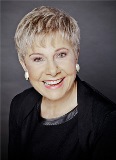 The Silicon Valley Speechwriters Roundtable hosted Patricia Fripp for a webinar on ‘Speech Coaching to Simplify Your Job & Electrify Your Executives’. A full video recording of the event is available.
 Members of the
  Silicon Valley Speechwriters Roundtable joined
  Members of the
  Members of the
  Members of the
 Award-winning speechwriter
  Pete shared a simple yet powerful speechwriting secret to plan the structure of a speech. He posed four essential questions you need to answer before proceeding, Babe Ruth style, to the next step.