Book Preview: The Age of the Image, by Stephen Apkon

The Age of the Image CoverChristopher Caldwell writes in the Weekend FT about a new book, The Age of the Image: Redefining Literacy in a World of Screens, by Stephen Apkon (available tomorrow on Amazon).

Apkon argues that there is a new kind of global literacy, based not on words, but images. This looks like a significant book for anyone involved in executive communications, speechwriting or professional speaking. The Amazon review states:

We live in a world that is awash in visual storytelling. The recent technological revolutions in video recording, editing, and distribution are more akin to the development of movable type than any other such revolution in the last five hundred years. And yet we are not popularly cognizant of or conversant with visual storytelling’s grammar, the coded messages of its style, and the practical components of its production. We are largely, in a word, illiterate.

But this is not a gloomy diagnosis of the collapse of civilization; rather, it is a celebration of the progress we’ve made and an exhortation and a plan to seize the potential we’re poised to enjoy. The rules that define effective visual storytelling—much like the rules that define written language—do in fact exist, and Stephen Apkon has long experience in deploying them, teaching them, and witnessing their power in the classroom and beyond. In The Age of the Image, drawing on the history of literacy—from scroll to codex, scribes to printing presses, SMS to social media—on the science of how various forms of storytelling work on the human brain, and on the practical value of literacy in real-world situations, Apkon convincingly argues that now is the time to transform the way we teach, create, and communicate so that we can all step forward together into a rich and stimulating future.

Caldwell quotes Elizabeth Daley, Dean of USC’s School of Cinematic Arts, who believes writing today is like Latin on the eve of the Renaissance–the language of scholars. YouTube clips are now the street language and the medium of creative thinking–the equivalent of vernacular Italian.

Apkon’s book includes chapters on why the brain sees pictures first and the rules of grammar in the age of images.

This sounds like a fascinating and provocative book and I’ve just pre-ordered my copy. I’ll overlook the fact that this is 260-page printed book and not a 120-minute movie. I’ve always considered myself more of a scholar like Cicero than some street-smart guy haggling on the Via Salaria.

The Financial Times is 125 years old today

Financial Times 1888I was delighted to open my favorite newspaper this morning and learn that the FT celebrates 125 years in print today. The special insert included a facsimile of the front page of February 13, 1888, when the news included updates on railway bond issues and the profitability of a machine that manufactures glass bottles:

“…these machines will, it is stated, turn out about 80 gross bottles a day, as compared with eight gross as the produce of two men and three boys by the hand process”

There was also an evaluation of European politics that warned of “the perpetual scheming of kings and emperors … resulting in that to-day we stand face to face with a huge and impending European conflagration, from which no human foresight can forsee or forestall who shall escape” — this 26 years before the First World War began.

Reprints of past front pages marked JFK’s funeral, Nixon’s resignation, the fall of the Berlin wall, 9/11 and more. Apart from my subscription copy, delivered before 7am on pink paper to my doorstep in Castro Valley, I see Barack Obama states “I read the Financial Times…” and that Clinton-era Treasury secretary Robert Rubin claims the FT “was invariably more useful than his daily CIA digest.” There’s also a Chinese ambassador who says that “We always read the FT in the embassy because capitalists never lie.”

But it’s the Weekend Edition that has been my Saturday morning treat for many years. Likewise for Nichols Serota, the director of the Tate Gallery (“The Weekend FT was a brilliant invention”) and fashion designer Diane Von Furstenberg (“I look forward every week to reading the weekend edition.”)

If you are not yet hooked on the FT then do yourself a favor. For today only you can subscribe for a year for only $125.

Visionary Artist: Nam June Paik anticipated the internet

An astounding story on BBC America this evening about the Korean-born visual artist Nam June Paik, considered the father of video art, who coined the phrase “electronic superhighway” in 1974 while creating works that pushed the boundaries of television.

Cisco might like to claim Tomorrow starts here, but Nam June was building his version of tomorrow’s world a full 10 years before Cisco came on the scene and gradually built an internet backbone capable of handling video in ways that instantiate the artist’s vision.

Paik’s work, which has been put on display at the Smithsonian American Art Museum in Washington DC, envisioned a future where the transmission of piles of data could happen instantaneously.

Paik, who died in 2006, was the first artist to experiment with the platform of television, seeing it as an open canvas on which many more artists would one day construct their works.

Smithsonian American Art Museum director Betsy Broun says the futurist was “like an antennae that was pointed out into the world, absorbing ideas”.

Information_Superhighway

Smithsonian senior curator for media arts, John G. Hanhardt, speaks passionately about the impact of digital media on the global consciousness in a way that is beyond the boundaries of any one discipline:

You know, I really do feel that 20th century art history is going to be rewritten through the moving image: from film to video and television, to video games, interactive platforms, the Internet. All the arts—whether literature, poetry, dance, sculpture—have changed because of these media as art forms. The whole telling of stories has changed remarkably through the impact of cinema and television and all of these moving image discourses. And they’ve also become art forms themselves, not only as classical cinema but as avant garde film practice, documentary, narrative, video art, installation and performance all throughout the 20th century. The very exciting access to a global history of the moving image through the Internet as well as the mobility of the artist to work and create digitally in a variety of forms and through diverse media platforms. It is really the new paper, the new printing press. However you want to look at it! That changed how we saw information. I do think that artists give us new ways to see ourselves and see the world around us, it is at the center of art history. And Nam June certainly achieved that transformation of video through his art.

Were he alive today, I suspect Paik would be looking 50 years ahead to a future we cannot imagine, where technology that currently seems outlandish is commonplace.

Mushy peasy, Fresh and Easy

News today that the most successful supermarket chain in the UK is considering pulling out of the US. Tesco invested $1.6B in opening 200 “Fresh & Easy” stores in the western US.

You say tomato

The Financial Times reports that this has proved an “overseas misadventure” for the British grocer. Sales have disappointed. Tesco’s American dream is in tatters. The FT article highlights the cultural differences between the way consumers shop on either side of the Atlantic.

However, none of these supposed differences ring true for me. Let’s take a close look at each of the claims:

US consumers like to pick up and touch their fruit and veg, something that proved difficult with Fresh & Easy’s shrink wrapped produce.

Wrong! UK consumers are the one’s with touchy-feely habits. In my parents home town of Nantwich, Cheshire, the greengrocers display piles of potatoes, cabbage and seasonal apples in open bins on the pavement. With the exception of the minority of Americans who visit Farmer’s Markets, or who can afford Whole Foods, most supermarkets in the States are far more likely to shrink wrap “fresh” fruit and veg. That’s if you can even tell the difference between the gargantuan waxed apples and plastic-wrap in the first place.

US consumers like brands, but Tesco focused on developing its own-label range.

Not so! US consumers have driven the sale of private label foods to a respectable 18% of the overall packaged food market, according to recent reports on the $5B purchase of Ralcorp by ConAgra.

US consumers are not used to self-service checkouts in grocery chains.

Oh? While it is noticeable that UK supermarkets provide chairs for cashiers while the US makes the clerks stand (the better to look ’em in the eye?), my local Safeway store has self-service counters as an option. In Minnesota it’s even quite normal to see shoppers bag their own groceries, instead of holding up the line staring vacantly into space waiting for the clerk to perform the highly skilled bagging operation. Any store that speeds the checkout with a self-service option has my vote. Undoubtedly, my grandmother mourned the passing of the old fashioned general store where the clerk fetched everything off the shelf for you. That was then, this is now. Americans change with the times.

The US is made up of a collection of local markets; tastes differ as much from state to state as across national borders.

Triple Oh?

England has: Lancashire hot-pot, Cheshire cheese, Eccles cakes, Cornish pasties, Devon cream teas, Yorkshire pudding … all from the country the size of Oregon.

The States has: Southern fried chicken, Rocky Mountain Oysters, Wisconsin Cheddar, Boston baked beans … in a Continent the size of the whole of Western Europe.

The winner for regional cuisine is clearly America. That’s why McDonalds, TGI Friday’s, Starbucks, Wendy’s and KFC have had such a hard time serving consumers in the vast collection of intensely local markets with their distinctive tastes.

Mushy PeasOr not.

At the end of the day, any grocery chain from a country where the consumers expect to purchase Marmite and mushy peas in aisle five are going to have a difficult time selling their wares in the land of the red, white and blue.

The 2012 Presidential Election: Transmedia Storytelling in action

Harvey Dent Campaign PosterToday’s US Election can be seen as the culmination of the most expensive transmedia storytelling campaign in history. Unlike the year-long Why So Serious? campaign that Warner Bros. funded to promote the Dark Knight Batman movie, and was reported to involve 10 million players, the United States Democratic and Republican Political Parties funded a multi-year “election campaign” that has involved hundreds of millions of players.
Multiplatform Storytelling

Unlike political campaigning in the era before ubiquitous digital content, when politicians would appear in person or on radio and television to promote their views, the 2012 US Election was a true transmedia experience.

Candidate messages were re-purposed in political ads, often funded by PAC’s that pretended to have no connection to the politicians themselves, but in fact were staffed by people who, as they say, were most likely in bed with the candidates.

There were extensive, you might say endless, discussions about the candidates and their ads on television, on Twitter and other forms of social media and, in a hang-over from an earlier era, even in bar rooms and coffee shops across the country.

Alternate Reality Game

The political parties encouraged players to display bumper stickers on their cars and signs on their lawns with the goal of stimulating interest in an election game that came to a climax in today’s visit to polling stations, where the ritual of voting was enacted. This whole alternate reality game (ARG) was conducted in terms of a backdrop of “messages” that candidates, their wives, supporters and surrogates communicated to players who then repeated the messages they liked to friends and neighbors.

Lack of participation

Despite the billions of dollars spent on the story, it’s worth noting that participation in the actual voting is minimal among the younger age groups. Many of them exhausted their interest in these games after marching in the street to promote The Dark Knight.

After all, when you’ve got Gotham City to save, who has time to select the leader of the free world?

Book Review: Cash Out, by Greg Bardsley

All these people that you mention
Yes, I know them, they’re quite lame
I had to rearrange their faces
And give them all another name
— Desolation Row, Bob Dylan

Fear and Loathing in Silicon Valley

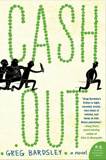
Cash OutGreg Bardsley does for Silicon Valley what Hunter S. Thompson did for Las Vegas. His new novel, Cash Out, is a 400-page gonzo-journalism inspired riff on a bizarre world hidden behind the bland office parks and drab suburbs of the San Francisco Bay Area.

His alter-ego, Dan Jordan, is days away from seeing his $1 million stock options vest, yet the moment he leaves the medical office where’s he’s just had a vasectomy, things start unraveling. He’s kidnapped by a rabid band of redundant IT workers who blackmail him into betraying the trust of the executive he writes speeches for. From this point on, the clock is ticking and the game’s afoot.

Bardsley, I mean Jordan, is an emasculated postmodern hero married to a kick boxing beauty and best friends with a cage fighter. Caught in a maelstrom of comic book violence he lurches from one scrape to the next, searching for bags of frozen peas to numb his bruised gonads, surviving on pain killers and alcohol. He loves his family, despises his boss and is unnerved by a cartoon character cast of neighbors who indulge in sadistic rituals with lawn furniture behind the innocent facades of their suburban garage doors. Some truly strange stuff here. I’ll never be able to ride on the upper deck of a London bus again without the sour memory of Bardsley’s scatological imagination re-surfacing.

Silicon Valley Speechwriter

Greg and I have worked as speechwriters at some of the same Silicon Valley companies. But his novel describes a parallel universe that I could not possibly have imagined. Nor did I find anyone recognizable in this work of fiction. He really did rearrange faces and give them all other names.

But anyone who makes their living as a professional speechwriter will recognize his interactions with egotistical executives, scheming support staff and the faux-glamour life in the corporate jet fast lane. For me, the vasectomy and subsequent attacks on his mid-section symbolically represent all the suffering speechwriters endure: doing whatever it takes to put words of wisdom into the mouths of the real men who deliver the speeches; constantly threatened with crazy deadlines, undermined by outside consultants, sleep deprived and subservient.

Greg is a fantastic writer. The dialog crackles, the pace is relentless, the characters unforgettable. The lottery-like frenzy of Silicon Valley stock options must have given rise to countless tales of those who were able to cash out and those who missed the jackpot by a few months, weeks or days.

You don’t need to go to Las Vegas to gamble your life away. Cash Out tears the veneer off the Silicon Valley stock-option crapshoot. Kudos to Greg Bardsley for telling it like it is.

HUMOR: With or Without U

Thanks to Oriana at Gotham Ghostwriters for alerting me to this artfully produced parody of Irish rock band U2’s song “With or Without You”, recast as a promo for a recently published book on Scrabble: Is That a Word?: From AA to ZZZ, the Weird and Wonderful Language of SCRABBLE. If you are part of that vibrant subculture of U2 fans who are also avid Scrabble players this video will rock your world!

Presidential Speechwriters call for more discipline by candidates

The first day of the 2012 Ragan Speechwriters Conference at the Mayflower Hotel in Washington DC concluded with a blue-ribbon panel of former Presidential speechwriters (from both parties) calling for more discipline on the part of contenders for the USA’s highest office.

George H.W. Bush speechwriter Chriss Winston said Republican candidates are focused too much on process and the negative campaigns of their opponents instead of their vision of how to turn the country around. They need to discipline to focus their message. Reagan-era speechwriter Clark Judge agreed that the 24-hour media coverage will unseat those who practice politics as usual:

“Presidential communications begins with the discipline of thinking through what you’re saying, who you’re saying it to, how you’re saying it and whether you’re going directly through cable to the country or if you’ll be mediated by reporters picking out sound bites.”

The partisan speechwriters naturally talked up their own champions strengths and highlighted the weaknesses of the opposing party. However, moderator Lenny Steinhorn, in a clever twist, asked them to state what they’d advise if they were writing for the other side.

Here’s some of the comments that struck me.

President Obama’s strengths and weaknesses

  • Gets a lot of flack for using a TelePrompter, but at least this shows he has planned his remarks and does not go off message or ramble. Some attributed this to his relatively short tenure as a senator, and those who have long senate records tend not to succeed as candidates (Kerry, Dole, McCain) who have the muscle memory of years of long-winded Senate speeches to overcome.
  • There’s a danger in his expertise with rhetoric and he needs to back up his speeches with actions. Style alone, where he’s the clear leader, won’t win alone. Content matters. Tie deeply held values to policy specifics.
  • His approval ratings have a “trading range” of 40-50% – if he’s at the top of that range in November he’ll probably win, if at the bottom, probably lose.
  • Obama was elected because his bio and the vision he had for America came together in a compelling manner. However, his speeches while in office have often lacked this. His core message since in office has shifted from Hope/Change to the Problem I Inherited to the Car in the Ditch to Millionaires and Billionaires to Fair Play by the Rules to the War on Women.
  • He’s weakest in terms of gas prices and the economy and the eventual Republican opponent needs to focus on this.
  • There’s a danger that the more he speaks on the economy the lower his ratings will go. It reminds people of the things they don’t like about him. Addressing contraception was a good move.
  • One suggestion from George W. Bush speechwriter Jonathan Horn is that Obama seize on the 1862 Preliminary Declaration on Emancipation as something all Americans can take pride in and refer to it in his September 2012 Convention speech.

Mitt Romney’s strengths and weaknesses

  • There was general agreement that Romney was the most likely Republican candidate. Minimal mention was made of Santorum or Gingrich.
  • The most frequent demand was that Romney tell his story to the American people. Bush in 1988 is seen as a role model for Romney: a decent guy who can present an alternate view of government. Yet no-one knows his story. Romney needs to tell the story of his family, going back to his Dad who was an incredible speaker, but by no means an immigrant from Mexico! Romney needs to let people know what his core values are. The Convention speech is the ideal time to reframe his story and share what he believes. (I was fascinated not one panelist mentioned that were he to tell his whole story it would have to include what took his ancestors to Mexico in the first place, and the central role the Church of Latter Day Saints plays in his life and how he must have more than a passing fluency in the French language. But, to my knowledge, neither a word of French nor mention of the Angel Moroni has ever passed his lips on the campaign trail.)
  • He’s far more than the “successful businessman”. This is too clinical. There are awkward aspects to his wealth for some, but none that Bush did not face in ’88, and overcome with the “jiu-jitsu” comments about living in an ordinary home in Texas, sweeping Andover and Yale under the rug.
  • Romney needs to define himself as the man of the moment.
  • He must offer a clear, concise vision of where the country should go and focus on the economy to beat Obama.

In Conclusion

Overall, this was an enlivening panel discussion where current political differences in the USA were debated in a civilized manner. However, it might be a measure of how far down the divisive path America has come that some of the European attendees at the Ragan Conference were aghast at the level of partisanship. I guess they need to watch a few CNBC and Fox News shows, followed by a drive-time commute with Talk Radio, to realize how constructive the panel discussion actually was.

Urban Life in Modern China: rush-rush to crush-crush

In 1985, controversial French sociologist Michel Maffesoli created the term “urban tribe” to describe groups of people who share common interests. The current issue of The Economist has a fascinating article about the subdivisions of urban China into various improbably named tribes (or zu in Mandarin).

These include:

  • Yi zu, or ant tribe—recent graduates from outside the main cities who move to urban areas, live cheaply, work hard, often in low-paid jobs. This term was term coined by Chinese sociologist Lian Si in his 2009 book, Ant Tribe. He says “They share every similarity with ants. They live in colonies in cramped areas. They’re intelligent and hardworking, yet anonymous and underpaid.”
  • Ken lao zu, the bite-the-old tribe, those between 25 and 35 who are underemployed or out of work, still at home and sponging off their parents.
  • Jia wan zu, the marry-the-bowl tribe. These are young women searching for that most stable of husbands, the one who holds a government (or “iron rice bowl”) job.
  • Yin hun zu, the hidden-marriage tribe. Women in their 20s who hide the fact that they are married, knowing they will not be hired or promoted in paternalistic Chinese companies unwilling to grant maternity leave.
  • Wo ju zu, the snail-house tribe who can only afford a postage stamp of an apartment.
  • Ben ben zu, the rush-rush tribe, to which, in fact, most urban Chinese belong.

and last, but not least:

  • Nie nie zu, the crush-crush tribe, so named because they go into supermarkets and take out their frustrations with urban life by standing in the aisles crushing packets of instant noodles. Well, why not? It beats going postal.

Manufacturing Industry: China will win, hands down

I download podcasts and listen to them on my drive to work. Today, driving my 16-year-old car which has any number of replacement auto parts keeping it on the road, listening to a 3-year-old Apple iPod, I heard two stories which described how electronics and auto parts are manufactured in China and America. Apart a clearer understanding about where the things I use in my daily life are made, I was struck by the diametrically opposed nature of Chinese and American manufacturing. Really, it was night and day. Click on the links below and listen to the podcasts for yourself. Both stories make for very compelling listening.

This American Life: Mr. Daisey and the Apple Factory

Mike Daisey was a self-described “worshiper in the cult of Mac.” Then he saw some photos from a new iPhone, taken by workers at the factory where it was made. Mike wondered: Who makes all my crap? He traveled to China to find out.

He visited the Foxconn assembly plant in Shenzhen, a city of 14 million that did not exist 30 years ago, the third largest city in China that almost no-one in the West has heard of. It’s where, Daisey says, “all our electronic crap comes from … Shenzen looks like Blade Runner threw up on itself.”

Apple FactoryWhat he found there was the “back to the future” nature of Dickensian-style labor-intensive assembly plants where all the PCs, laptops, cell phones, tablets and MP3 players come from. These vast assembly plants employ tens of thousands of people in each building:

… a creature of the first world, I expect a factory making complex electronics will have the sound of machinery. But in a place where the cost of labor is effectively zero, anything that can be made by hand is made by hand. No matter how complex your electronics are, they are assembled by thousands and thousands of tiny little fingers working in concert. And in those vast spaces the only sound is the sound of bodies in constant, unending motion.

Daisey concludes:

How often do we wish more things were hand-made? We talk about that all the time, don’t we? “I wish it was like the old days, I wish things had that human touch…” But that’s not true. There are more hand-made things now than there have ever been in the history of the world. Everything is hand-made. I know, I have been there, I have seen the workers laying in parts thinner than human hair, one after another after another. Everything is hand-made.

NPR Planet Money: The Transformation Of American Factory Jobs

In American factories nothing is hand-made. Lacking cadres of rural migrants willing to work 16 hour days and sleep in cramped dorms, companies that are still manufacturing Stateside have replaced people with machines.

A decade ago, life in Greenville, South Carolina was organized around the cotton mills. Each mill had its own village, its own church, its own bar. These places were abandoned over the past decade as mill after mill went out of business. In the old Greenville the mills ran three shifts a day, and, as in China today, people with minimal education could work in a factory and make a living.

That was then, this is now.

Standard Motor Parts factory floorThere are still factories in Greenville, such as the Standard Motor Products plant that makes replacement parts for car engines. NPR reporter Adam Davidson expected to find a motor parts factory filled with big, noisy machines stamping out parts and spewing oil. Instead he saw workers hunched over microscopes. It looked more like a science lab than an assembly line.

The workers need an encyclopedic knowledge of metals and microscopes, gauges and plugs. They manage machine tools that create items like fuel injectors, which require precision engineering.

The few unskilled workers, in contrast, are trained to run the automated machines in minutes and can be replaced if the cost of “human capital” exceeds the capital cost of the machine.

The question is, can the 11 million unskilled manufacturing workers in the U.S. acquire the training they need, or will they have to take a slow boat to China to find work?

Adam Davidson explores life in Greenville in more depth in The Atlantic magazine.