The CEO’s Challenge: overcoming barriers to authentic communication

Authenticity is one the hallmarks of a successful presentation. Audiences can sense when a presenter is not delivering a message that is congruent with their beliefs. This is an emotional as much as an intellectual challenge, and one that many CEO’s are destined to fail. The reason, according to Anthony Goodman, writing in Monday’s Financial Times, is that many chief executives are prisoners of their environment. Quoting Professor Roger Martin who writes in Fixing The Game:

“Institutional investors, equity analysts, investment bankers, hedge funds and the financial press have emerged as central figures in the CEO’s community … a community rife with transactional relationships, exploitation and distrust.”

Martin believes that executives pander to these constituencies, leading them to make decisions that often do not deliver long-term value to the organizations they lead and deliver communications that lack authenticity.

When you hear a CEO present at a conference, you see one person. What you don’t see is the phalanx of communications staff, from the heads of Public Relations to the speechwriter, PowerPoint design team and event staff who had a hand in creating and revising the content that they deliver.

It’s a rare chief executive who has the time and attention on the speech to ensure that, as well as being an accurate communication about the institutional programs and objectives, it is also something that sounds totally authentic when they deliver it.

Audience’s remember those CEO’s who do take the time to embody their speeches as authentic communications of who they are. The rest, they forget.

Book Review: Cash Out, by Greg Bardsley

All these people that you mention
Yes, I know them, they’re quite lame
I had to rearrange their faces
And give them all another name
— Desolation Row, Bob Dylan

Fear and Loathing in Silicon Valley

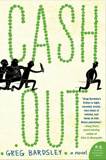
Cash OutGreg Bardsley does for Silicon Valley what Hunter S. Thompson did for Las Vegas. His new novel, Cash Out, is a 400-page gonzo-journalism inspired riff on a bizarre world hidden behind the bland office parks and drab suburbs of the San Francisco Bay Area.

His alter-ego, Dan Jordan, is days away from seeing his $1 million stock options vest, yet the moment he leaves the medical office where’s he’s just had a vasectomy, things start unraveling. He’s kidnapped by a rabid band of redundant IT workers who blackmail him into betraying the trust of the executive he writes speeches for. From this point on, the clock is ticking and the game’s afoot.

Bardsley, I mean Jordan, is an emasculated postmodern hero married to a kick boxing beauty and best friends with a cage fighter. Caught in a maelstrom of comic book violence he lurches from one scrape to the next, searching for bags of frozen peas to numb his bruised gonads, surviving on pain killers and alcohol. He loves his family, despises his boss and is unnerved by a cartoon character cast of neighbors who indulge in sadistic rituals with lawn furniture behind the innocent facades of their suburban garage doors. Some truly strange stuff here. I’ll never be able to ride on the upper deck of a London bus again without the sour memory of Bardsley’s scatological imagination re-surfacing.

Silicon Valley Speechwriter

Greg and I have worked as speechwriters at some of the same Silicon Valley companies. But his novel describes a parallel universe that I could not possibly have imagined. Nor did I find anyone recognizable in this work of fiction. He really did rearrange faces and give them all other names.

But anyone who makes their living as a professional speechwriter will recognize his interactions with egotistical executives, scheming support staff and the faux-glamour life in the corporate jet fast lane. For me, the vasectomy and subsequent attacks on his mid-section symbolically represent all the suffering speechwriters endure: doing whatever it takes to put words of wisdom into the mouths of the real men who deliver the speeches; constantly threatened with crazy deadlines, undermined by outside consultants, sleep deprived and subservient.

Greg is a fantastic writer. The dialog crackles, the pace is relentless, the characters unforgettable. The lottery-like frenzy of Silicon Valley stock options must have given rise to countless tales of those who were able to cash out and those who missed the jackpot by a few months, weeks or days.

You don’t need to go to Las Vegas to gamble your life away. Cash Out tears the veneer off the Silicon Valley stock-option crapshoot. Kudos to Greg Bardsley for telling it like it is.

Guest Posting: Online Presence is the New “Storefront”, by Gina Smith

Gina Smith writes freelance articles for magazines, online outlets and publications on behalf of a number of companies, including Spanning.com. Smith covers the latest topics in the business, golf, tourism, technology and entertainment industries.

Online Presence is the New “Storefront”

The majority of people and businesses now go online first when they want to search for a product or service. Your website is now your “storefront”. As a professional service provider, how can you ensure your online presence is not only appealing, but sells both you and what you do? Here are a few easy tips to help boost your online charisma.

Make your website appealing

Hire a professional to develop copy and design a website which stands out. Often, your website will be the first impression people have of you and your service. Is your website organized, designed well and easy to navigate? Or, is it cluttered, unappealing and just “there” so you have a presence. Think about your own consumer behavior. When you shop, do you choose stores, which are clean, well stocked and orderly, or ones which are disorganized and disheveled? Remember, your website is also your storefront.

Ask customers to connect with you through Social Media

Social Media is an excellent online PR booster. Peer impressions make an incredible impact. Connect with your customers and interact with them. If you are a freelance speaker, encourage your audience to connect with you as well. Perhaps even break the ice by jokingly saying something like, “OK, I’m going to strike a pose right now so anyone who wants to post a Facebook update about being here can take my picture…” Social Media is also a great avenue to ask questions and gather feedback about your services.

Continually check and monitor reviews

It doesn’t hurt to search your name or company every so often to see what is being posted online. If it is positive, help spread it! Link the positive comments to your website and interact with those posting them. If you discover negative content, address it immediately. Try to find the source and make every effort to reach out and explore opportunities to facilitate a positive experience.

Gather testimonials

Don’t be afraid to ask for testimonials. They can be simple, short (1-3 lines) statements from your customers about the quality of your work, their experience with you and recommending others to utilize your service. Obtain written permission to post these on your website, and across all of your Social Media platforms.

Technology has fostered an online culture which makes it imperative to implement Internet strategies that complement your traditional marketing and public relations efforts. While it can be overwhelming and time consuming, effective implementation of an overall online PR plan can prove very profitable in the long run!

How to write an Annual Report

In a recent blog posting I pointed out that an organization’s Annual Report is an important competitive differentiator.

When I’m hired to help write Annual Reports I follow a number of steps to ensure success. Since these reports are, of course, an annual event, it’s a good idea to put systems in place that will serve the purpose year after year.

Tracking Report Components

The first step is to break the report down into component parts. Use a spreadsheet to keep track of the content and owners of each section. Define the overall message and list how each chapter in the report supports this. Use the spreadsheet as a guide for all the team members: graphic designers, content creators, subject experts, proofreaders and review staff. Make the spreadsheet as detailed as necessary, you might list:

  • Page numbers: As the project progresses keep track of each section by page number.
  • Themes: If you have multiple themes for the report, color code the spreadsheet to show which theme each section falls into.
  • Deadlines: for draft copy, design work, interviews, research, and more.
  • Roles and Responsibilities: for both freelance and staff members.
  • Estimated time to complete: useful to measure the overall cost of the project.

Make one person responsible for the spreadsheet and route all status updates through them.

The Discovery Phase

Gather preliminary information to enable the writers to draft the content. Use a 3-ring binder to store source material, with tab dividers for each section of the report. Sources might include:

  • Previous year’s report
  • Competitors reports
  • Executive speech transcripts
  • Interviews with subject experts
  • Website content
  • Product brochures
  • Press Releases
  • PowerPoint presentations
  • Analyst reports
  • News articles

These days, most of the content will be online, but a printout in a binder will help as you start to review and collate what you need as background for each section of the report.

You should also create a hierarchy of bookmarks in your browser, corresponding to tabs in the binder, to store relevant website information.

First Drafts

As early as possible, the writers will need to create outlines of each section which can be expanded into first drafts. A good working relationship between the in-house staff and the freelance writer is crucial at this point. It’s worth taking the time to spend a day meeting in person at the start of the project, or at least scheduling a videoconference on Skype or TelePresence so that everyone is operating from a position of trust. There will inevitably be challenges in communicating what the organization needs the report to say and how the writer interprets this. One major advantage of working with a freelance writer is that they bring a fresh pair of eyes to content that people inside the organization might be too close to.

Rewriting

I’m amazed at the similarities between writing speeches and writing Annual Reports. Both projects:

  • are highly visible and represent the overall company vision and strategy;
  • involve upper management in the approval cycle;
  • also involve a large team of support staff, from marketing and PR to legal and financial teams;
  • must find a balance between an overall message and supporting data, avoiding fluff while not boring everyone with facts alone;
  • inevitably involve many rewrites before the content meets corporate standards.

Again, an experienced freelance writer will be able to craft the 150-, 500- and 750-word versions of the text you’ll need on each topic. Indeed, like keynote speeches, a good Annual Report will contain material that can easily be re-purposed and used in sales and marketing presentations by staff throughout the year.

Online Versions

Wolters Kluwer 2001 Annual Report

While the printed Report might be distributed at the annual general meeting and mailed to shareholders, there’s a great opportunity to post content online. The least effective way is to have a downloadable PDF of the printed report. Consider hiring a savvy web designer and have them create a dedicated corner of your website where the content can come alive. Wolters Kluwer did just this for the online version of their Award Winning 2011 Annual report. You can also read the report in a dedicated iPad app.

Annual Reports: A competitive differentiator

Annual Reports are required of all public companies. While some elect to publish the minimum information required by law, others see their Annual Report as an opportunity to showcase the achievements of the past year to current and potential investors; press and analysts; customers and partners. Indeed, a well-written and attractive Annual Report can be a competitive differentiator, helping brand a company by listing past accomplishments and strategic direction.

In order for an Annual Report to have maximum impact, it’s important that not only are the financial statements accurate, but that the whole report, from the Chairman’s letter to product and program information, is compelling and coherent.

Design

Creative graphic design is a feature of many Annual Reports. Awards for creative design acknowledge those that have invested in a unique look and feel. Some of these Reports rival the trendiest of European fashion magazines in eye-catching color, layout and style.

Content

However, it’s content that matters. Awards that judge Reports based on narrative as well as design are more accurate reflections of the publications use to investors. Very few investors are likely to be swayed by design alone. But a well-written Annual Report, like the Award Winning 2011 Wolters Kluwer Annual Report that I worked on, can focus attention on the best aspects of a companies competitive advantages, product offerings and benefits.

Writing your Annual Report

Producing a well-written Annual Report takes time. Staff in Marketing and PR are the people most likely to be tasked with gathering information from across the organization. In order to create content, they will need to contact subject experts in sales, engineering, support and administration. A well-written Report should contain a mix of data and human interest stories to attract and keep the readers attention. While there’s no way to dress up the Financial Statements, nor would regulators permit this, the rest of the Report can tell stories that showcase the best aspects of the company.

Hiring a freelance writer

In-house staff face the challenge of finding time to research, collate and write the Report on top of their existing duties. Hiring an experienced freelance writer not only relieves this time crunch, but also offers a new perspective. Especially for organizations with multiple divisions, an outside writer can bring coherence to a report which might otherwise seem as if it has been patched together from different sources.

In future blog postings I’ll be sharing my own experience as a freelance writer working on Annual Reports and, in addition to listing tips and tricks, suggesting ways to make the collaboration between freelancer and in-house staff as effective as possible.

If you have any specific questions you’d like me to address, please leave a comment.

HUMOR: With or Without U

Thanks to Oriana at Gotham Ghostwriters for alerting me to this artfully produced parody of Irish rock band U2’s song “With or Without You”, recast as a promo for a recently published book on Scrabble: Is That a Word?: From AA to ZZZ, the Weird and Wonderful Language of SCRABBLE. If you are part of that vibrant subculture of U2 fans who are also avid Scrabble players this video will rock your world!

Interview: Jag Randhawa – Technology Innovator

“Creativity is thinking up new things. Innovation is doing new things” – Theodore Levitt

Jag RandhawaJag Randhawa shares a deep passion for making a difference in the world, and enjoys sharing his life lessons through speaking. Creating a Culture of Innovation is one of Jag’s most requested talks, based on the Open Innovation program he developed in his company. His presentations are interactive, engaging, and appeal to the heart, creating a lasting impact.

Jag serves as the Vice President of Information Technology and eCommerce at CAMICO Mutual Insurance, where he manages the Technology portfolio and eCommerce channel. Jag has integrated his passion for neuroscience and behavior psychology to develop a very scientific approach to inspire employees to perform at their best. This approach also contributed to the development of an Open Innovation program where all employees contribute ideas to grow the business.

Jag is a frequent speaker at many CIO and executive networking events where he shares his experiences on Leadership, creating a Culture of Innovation, and Employee Engagement. Jag has more than 20 years of technology industry experience. He is an active contributor to the local CIO community and chairs the Silicon Valley CIO chapter of TechExecs. Prior to CAMICO, Jag worked as an IT consultant and engineer serving a broad range of industries where he developed many innovative and award-winning software systems. Jag has degrees in Electronics Engineering and Information Technology.

His website and blog is available at: http://jagrandhawa.com/

Culture of Innovation

Innovation is ranked as the top priority year after year by CEOs in annual surveys, but most struggle with how to get started. How do you take the resources you have and spark interest in creativity and innovation? Jag has created a simple program to help companies get started in creating a Culture of Innovation. The program engages employees to generate ideas that will increase the top line and create operational efficiencies. When companies involve employees, they are more engaged, and go above and beyond the call of duty to make the company more profitable.

Pro-Track Profile

I recently talked with Jag about his background. To hear what he told me, and the results he’s seen proven in his own organization as a result of embracing a culture of open innovation, as well as his impressions of the National Speakers Association Pro-Track class that he is part of, click on the podcast icon below.

Recommended: THNKR: PODIUM YouTube Channel

I’ve just come across a fabulous Channel on YouTube.

THNKR posts original videos in four sub-categories: on books, prodigies, thought leaders and public speaking. The public speaking channel (called PODIUM) is described as

Embracing oration & those with something to say. From historic political speeches, to contemporary commencement addresses, to wedding toasts, the series explores various genres of speechmaking and provides inspiring insightful analysis including “how-to” content. New episodes premiere ever other week, and run about seven minutes.

Here’s an example of the well-produced content – four tips on overcoming fear of public speaking.

I also enjoyed the analysis of Obama’s 2004 Convention speech which launched his career and features commentary by American University professor Robert Lehrman and other experts.

Interview: Austin Hill Shaw – Creativity Instigator

Austin Hill ShawFor as long as he can remember, San Francisco Bay Area-based Austin Hill Shaw has been enraptured by creativity and the creative process. In 2004, stemming from a life-changing insight gained during a three-month meditation retreat, he began exploring the subject of creativity in earnest, wanting to understand the opportunities and challenges behind creativity’s seemingly universal appeal. Since then, he has amassed a wealth of knowledge regarding creative expression in art, science, and religion, in childhood development and adult maturation, in business and the economy, in product innovation, in both intimate and organizational relationships, and in non-ordinary states of consciousness, delving into the very core of what is means to be human. More importantly, he has striven to embody all that he’s learned, using his own life as an ongoing experiment, testing and refining his methods in his own pursuits as a writer and architectural designer.

Between The Bridge and the WaterToday, in a time of rampant job automation and outsourcing, Austin’s message regarding the importance of creativity and how to activate it is swiftly making its way out into the world. Drawing upon an innovative mix of cutting-edge science, artistic expression, and age-old spiritual wisdom, Austin presents a timely and enlivening understanding of creativity, one that ignites the full-person creative potential of individuals and organizations alike. He just released his provocative first book in his Awakening Creativity Series, a book entitled, Between The Bridge and The Water: Death, Rebirth, and Creative Awakening, and will be releasing his next book, The Shoreline of Wonder: The Path of Creativity later this summer.

Whether he is addressing a large audience or working with an individual one-on-one, Austin combines visionary insight with heartfelt empathy, profound ideas with unexpected humor, sobering seriousness with joyful irreverence, all with a remarkable sense of presence. He is a gifted story teller, one with the ability to unpack the complex subtleties of the creative process and present them in a way that can be put to use immediately. Through his keynote presentations, writing, and one-on-one coaching, and through his work with his architecture clients, Austin Hill Shaw is dedicated to helping others awaken their natural creative capacities and to share their creative gifts with others.

Find out more about Austin, his speaking and coaching offerings, and his other creative pursuits at www.austinhillshaw.com.

Pro-Track Profile

I recently talked with Austin about his background. To hear what he told me, and the plans he has to instigate creativity in the world, as well as his impressions of the National Speakers Association Pro-Track class that he is part of, click on the podcast icon below.

Relevant Resources: Web resources for speakers

I help edit SPEAKER Magazine for the National Speakers Association (NSA). Each month I curate the Relevant Resources column – a list of time-saving tools and technologies.

The July / August 2012 edition listed web-based resources for professional speakers. This is the last column I will edit, as a new editorial team takes over in September.

Experienced speakers know that they need all the help they can get. It is a mistake to try and do everything yourself. However, most tasks that used to require a full-time person can now be completed with the help of web-based software or a virtual assistant. What’s more, today’s cloud-based apps give you access to projects and allow for easy collaboration with your staff from your desktop, laptop, or mobile device.

The Grass is Greener

Grashopper screenshotThe Grasshopper® Entrepreneur’s Phone System lets you run your business professionally using cell phones. With a local or toll free number, unlimited extensions, live call forwarding, on hold music, name directory, and more, your small business can function like a Fortune 500 company. With Grasshopper, you can be reached on your home, office, mobile or VoIP phone. Plans start at $24/ month.

Carbon Copy

Carbonite logoHard drives crash. Laptops get stolen. Files are accidentally deleted. Let’s face it; our lives are on our computers. Stay in the clear with Carbonite®, a software that backs up your files to the cloud automatically so you can access them any time. Carbonite also has a free mobile app, allowing users to access their files on the go. Free trial. Pricing starts at $59/year for unlimited backup space for one computer.

Happy Camper

Basecamp LogoTake the “work” out of teamwork with Basecamp, a web-based project management system that makes collaboration easy with integrated email and calendars. Basecamp lets you to organize all of your documents in one place and share them with colleagues and clients. It also integrates with third-party apps like Highrise® CRM, Backpack, and Campfire chat. Starts at $20/month for up to 10 projects.

Done and Done

Do ScreenshotRecently acquired by Salesforce.com, Do is a social productivity app that works with Google Apps, Dropbox, and Salesforce (of course) to sync tasks and help you manage projects with your team no matter where you are. Do also includes a Gmail gadget that allows users to assign tasks via email. Simply send a short email to task@do.com and the app will automatically detect your address and add an entry. Free.

It’s in the Box

Dropbox logoGain remote access to your files from any web browser or mobile device when you create an account with Dropbox. The app lets you store documents, photos, music files, and videos securely, and access them later from any location – your home, office, or on the road. Works with Windows, Mac, Linux, iPad, iPhone, Android and Blackberry. Free for 2GB of storage; up to $200/year for 200GB of storage.

Google Plus

Google Apps ImageYou’re probably already familiar with Google’s Gmail, but have you utilized Google Calendar, Google Docs, and Google Drive? Explore the full suite of cloud-based apps from Google that let you create and share documents, sync calendars, send event reminders and attachments, and store files that can be accessed from anywhere. Google Drive is free for 5GB storage. $4/month for 20GB. See them all at Google.com.

Make Contact

Constant Contact LogoKnown as a popular email marketing tool, Constant Contact® recently added event marketing to its laundry list of services. Use this web-based tool to create and customize email campaigns from more than 400 template designs, add images and video links, blog content, surveys, and more to help your clients interact with and benefit from your newsletters. Starting at $15/month for 500 contacts.

Get Smart

Smartsheet logoLike a spreadsheet, but smarter, Smartsheet is a real-time collaboration tool that lets you manage projects, tasks, sales, marketing, human resources, and more. Smartsheet spreadsheets integrate with Google so you can update on the go, and they can be linked to Salesforce accounts, contacts, and opportunities for collaboration on project statuses, files, and discussions. $15.95/ month for up to 10 projects.

Speaker Solutions

espeakers logoOrganize, promote, and grow your business with simple, proven solutions that allow you to spend more time speaking and less time dealing with administrative chores. eSpeakers, founded by an NSA member, is the industry standard, offering user-friendly business development tools that make you look competent and polished behind the scenes, as well as on the stage. Starts at $39.95/month.

You can subscribe to SPEAKER magazine on the NSA website.