Toastmasters International goes … international

Toastmasters Kuala Lumpur
For the first time in its 90-year history, Toastmasters is holding its International Convention outside of North America at the Kuala Lumpur Convention Centre in Malaysia, Aug. 20-23.

The featured presenters include Robin Sieger the former Head of Development at BBC Television who will deliver the keynote presentation during the Opening Ceremonies on Wednesday, Aug. 20. A former television executive and comedy writer, Sieger is the author of Natural Born Winners and a motivational speaker from Scotland who speaks about innovation to Fortune 100 companies around the world.

Astro Malaysia Holdings’ CEO Rohana Rozhan will be honored as the recipient of the nonprofit organization’s 2014 Golden Gavel award. The prestigious award is presented annually to an individual distinguished in the fields of communication and leadership. Rohana joins an illustrious list of Golden Gavel honorees, including Walter Cronkite, Stephen Covey, Deepak Chopra, Anthony Robbins and Zig Ziglar.

Other presenters include:

Jana Barnhill, Accredited Speaker and Toastmasters 2008-2009 International President from Lubbock, Texas. She is a five-time winner of the District 44 International Speech Contest, and has placed second and third in the Toastmasters World Championship of Public Speaking.

Mark Brown, 1995 Toastmasters World Champion of Public Speaking. Originally from Kingston, Jamaica, Mark now lives in the U.S., in Lizelle, Georgia. He is a member of the National Speakers Association and delivers more than 200 presentations per year.

Douglas Kruger, Author, motivational speaker and presentation skills coach based in Johannesburg, South Africa. He delivers motivational presentations and training seminars for large organizations, including Old Mutual, Caltex and Vodacom.

Lance Miller, 2005 World Champion of Public Speaking. A resident of Glendale, California, he is a former executive for Nestle and Anheuser-Busch. Miller engages his audience with a unique mix of talent and life experience that bring his messages to life.

Florian Mueck, A speaker, coach and author based in Barcelona, Spain, who speaks three languages (English, German and Spanish). In 2010, he gave a talk for TEDxBarcelona titled Europe: How to Unleash a Common Spirit.

Rory Vaden, Entrepreneur, consultant and author from Nashville, Tennessee who speaks to audiences about how to say no to things that don’t matter, and yes to things that do. At age 23, he placed second in the 2007 World Championship of Public Speaking.

Speechwriting — Success Behind the Podium with Barbie Tootle

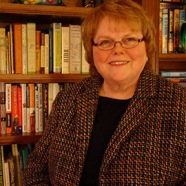
Barbie_TootleBarbie Tootle is President of Left Field Consulting, which provides freelance writing services, consultation in communication strategies, and training in creativity and personal development. She researches and writes speeches for CEOs and senior officers in the corporate world, non-profits, and higher education. Barbie also writes scripts for large events and videos. She is story editor and researcher on the documentary film Song of the Soul: Stories of Hospice in South Africa.

For 15 years, Barbie was Director of Special Projects and Special Assistant to the President of The Ohio State University, working for three presidents. She spent a dozen years in student affairs after receiving a bachelor’s and a master’s degree from Ohio State. Barbie has delivered hundreds of keynote speeches and facilitated hundreds of workshops and training sessions around the country.

Barbie is a member of the Board of Directors of The Ohio State University Alumni Association. She served as president of the Board of Trustees of Thurber House and volunteers in the Ohio Historical Society’s 19th-Century Base Ball Program. She is left-handed and shares a passion for baseball with her husband Jim, a baseball historian.

In this TEDx talk that was given at Ohio State University, produced independently of the TED Conferences, she discusses some of her speechwriting guidelines.

Free Livestream: NSA Conference

NSA14I’ve just found out that parts of this years National Speakers Association (NSA) conference in San Diego are being livestreamed for free from Sunday June 29th at 5:00pm through Wednesday July 2nd 5:00pm.

Highlights include:

  • Monday 8:30am Nancy Duarte and Steve Forbes “Resonate: Present Visual Stories that Transform Audiences”
  • Monday 2:45pm Storyboarding Workshop
  • Tuesday 1:30pm Roundtable including Alan Weiss, Roxanne Emmerich
  • Wednesday 10:00am Million Dollar Positioning: How to Position Yourself as the Expert with Alan Weiss

Lots more on the Livestream Agenda that is hosted by Jim Cathcart.

Register here for the livestream.

Also follow on Twitter: #NSA14

Lost tape archives

Blank on BlankMy experience of blogging is that it’s like waiting for a the bus — no material for days on end and then a whole bunch comes along at once.

Following my post yesterday on the Portland State University lost speech tapes, I found an article about the Blank on Blank project that curates lost tapes of interviews with famous people, mostly in the entertainment field.

I’ve enjoyed listening to Larry King’s hilarious story about his late night escapades as a young radio DJ, Janis Joplin on rejection, John Lennon on love, and Pete Seeger on writing ‘We Shall Overcome’.

These tapes are a great source of entertaining stories.

Portland State University speech archive

PSU SpeakersA Portland State University archivist has uncovered a box of reel-to-reel recordings of campus speeches by figures such as LSD advocate Timothy Leary, Robert F. Kennedy speaking a few short weeks before his assassination, Nobel prize-winner Linus Pauling speaking on the effects of radioactive fallout a few months before the Cuban Missile crisis, and poet Allan Ginsberg.

The recordings had been stored in a warehouse after the format went out of use. Luckily, most were in nearly flawless condition and sound as clear as the day they were recorded. PSU has converted 275 hours of tape recordings to digital format. They are available on the web, starting with the most recent recordings from 1979 (when I briefly lived in Portland, but unfortunately did not attend any of these events) all the way back to the earliest from 1952. (Ignore the message on the website stating “This document is currently not available here” and scroll down to the image of the reel-to-reel tape deck to listen.)

These are full-length recordings and include the speaker introduction and audience questions. They are a fascinating and useful resource for speechwriters looking for content on a variety of topics as well as a record of cultural change in America from the 1950’s to the 1970’s.

Guest Posting: Communicating at Virgin Atlantic, by Adam Schair

Adam SchairAdam Schair is Vice President, Human Resources Communications at Thomson Reuters in New York and a member of the Thomson Reuters Internal Communication & Engagement Council. He manages a team of human resources communications specialists. This post appears with his express permission.

Fortune Favors the Bold: Communicating at Virgin Atlantic, by Adam Schair

Virgin AdI recently went to a highly entertaining and informative IABC Westfair talk given by Jenna Lloyd, Virgin Atlantic Marketing Director, about communications at a company borne from Richard Branson’s innovative mind, created with the sole purpose of shaking up an industry. Although Jenna focused on external communications, she made it clear that Virgin’s internal and external communications are treated with the same tone and goal of challenging the status quo and creating the unexpected.

In fact, Jenna’s talk was called “Flying in the Face of Ordinary to create a communication culture.” Flying in the Face of Ordinary was not just the name of her talk, but Virgin Atlantic’s mantra; it’s north star. They call it FITFOO, and she recounted that in their many brainstorming meetings, when a person suggests an idea that is on the more mundane side, someone will inevitably say, “That idea is not FITFOO enough.”

The following is a summary of the five points of her talk, which were categorized by paraphrased quotes from Richard Branson himself. This all may make you slightly jealous of the Virgin Atlantic communications culture, but I saw it also as presenting an exciting challenge as we try to create an innovative culture (of course, I doubt we will be offering rides to outer space any time soon).

1. Being Brave is Part of our DNA

Jenna started with a quote from Simon Sinek, who some of you may know wrote the book Start with Why: How Great Leaders Inspire Everyone to Take Action and is a frequent TED talker, “People don’t buy what you do, but why you do it.”

She said that this quote really captured the essence of how they approach communications at Virgin Atlantic. To prove it, she then read from their principles, for lack of a better term, which contains phrases as:

  • We zig while others zag
  • We’re the antidote to dull
  • We do red where other’s do beige
  • And Richard Branson’s employment philosophy: Don’t just play the game; change it for good.

She took us through some their campaigns to illustrate how they not only use the unexpected to prove a point, but, going back to Simon Sinek’s quote, demonstrated the “why” as well as the “what.” Here are links to a few, if you want to read more:

2. Don’t think what’s the cheapest way to do it or what’s the fastest way to do it; think what’s the most amazing way to do it

When they make decisions at Virgin Atlantic, they do with the mission to make people feel good. It is simple in concept, difficult in practice. But many of their campaigns live up to this idea. Here are a few:

  • Twitter rewards campaign: the team scoured twitter and found people who made statements indicating they were having a “grey day.” They would then send a team to cheer the person up.
  • Anti-Mundane Squad: The team would identify mundane experiences (e.g., the local DMV) and brighten it up by bringing red velvet cupcakes.
  • No Ordinary Park Bench: The replaced a park bench with an experience similar to sitting in first class on the airline.

Of course, all of this was picked up in social media and went viral. An interesting (and I guess consistent) point about Virgin Atlantic and social media is that when they measure success, they measure sentiment first and reach second. Usually, it is the other way around.

Jenna summed it up in a quote from Maya Angelou, “I’ve learned that people will forget what you said, people will forget what you did, but people will never forget how you made them feel.”

3. Screw it, just do it

That is a direct Richard Branson quote, and he says it a lot. It speaks to creating a culture where there is no fear of failure when you try new things. It also speaks to the tongue-in-cheek tone that pervades their communications.

London EyeThe great example of this was when British Airways landed what seemed to be a marketing coup of being the primary sponsor of the London Eye. The story goes that at first, they had difficulty in raising the giant Ferris wheel into place. When Richard Branson heard this news, without hesitation, he hired a blimp to fly over the scene of the construction. I’ll let the picture (left) tell the rest of the story.

In this case, as Jenna quoted, “Fortune favors the brave.”

4. The way you treat your employees is the way they’ll treat your customers

I cannot imagine any of my communications colleagues would argue with this statement. Richard Branson is a strong believer in this, and that is why they try to treat their employees like rock stars. They make the work environment fun, and encourage a healthy work/life balance.

One example Jenna gave of creating a bit of glamour and fun was how they transformed their employee newsletter for their crew into a glossy magazine called Runway that provides glamour tips.

5. Bring it to the customer

Many of you have seen pictures of Richard Branson serving drinks on his airline. That iconic picture speaks to Virgin Atlantic’s Philosophy. They are always thinking of ways to proactively make their customers feel good. Examples Jenna gave included giving their customers that had to fly from home on Valentine’s Day a little gift to cheer them up, and sending cocktail shakers on Admin’s Day to executive administrators who book travel for their executives. The cocktail shakers came with a note that said, “thanks for keeping things together, now shake things up!” I am sure a lot of executives began finding themselves booked on a lot more Virgin Atlantic flights after that.

Parting advice

Jenna concluded by summarizing her learnings at Virgin Atlantic in the following seven points:

  1. Know your story; know your why
  2. Challenge convention
  3. Make people feel amazing
  4. Opportunity favors the bold
  5. Treat employees like customers
  6. Surprise & delight people
  7. Have fun

Every one of those points applies just as much to internal as external communications. Let’s shake things up!

Cultivating Stage Presence with The Second Circle

Second Circle Book CoverA highlight of last week’s PSA World Speechwriters Conference was hearing Edmée Tuyl describe differences in energy speakers bring to the podium. She outlined the concept of three circles of energy that comes from master speech and acting coach Patsy Rodenburg who speaks about the importance of cultivating what she calls “Second Circle energy” as a way for speakers to use their energy to be present (in “the present”) with an audience for maximum impact. Briefly:

  • First Circle energy is inward-looking, drawing energy toward the self, typical of introverted and nervous speakers.
  • Third Circle energy is forced out, toward the world in general, typical of bombastic and opinionated speakers.
  • Second Circle energy is focused on the audience, in relationship, taking in and giving out. This connection with the audience is characterized in theater as having “stage presence”. Presence that allows your message to survive.

Her book The Second Circle: How to Use Positive Energy for Success in Every Situation expands on the ideas she presents in this short video:

NY Speechwriters Conference Debrief 3 of 3

Part threeIn this third and final edited highlight of the Silicon Valley Speechwriters Roundtable conference call from the PSA World Conference, I give a summary of Bob Lehrman’s break out featuring a conversation with David Kusnet who was Clinton’s speechwriter. Katie Gray shares admiration for General David Petraeus’s intellect.

Brian Jenner shares Eric Schnure’s tips on writing for roasts and why it’s important to “singe not burn” and ways jokes can be reused. Schnure recommended writers do a “joke dump” and write 10 jokes for every one used. A good way to structure a joke is by associating a person or place in the news with a different issue. CEOs can get away with humor if they introduce it by saying “As Jon Stewart said…”.

To hear the audio, click on the podcast icon below.

NY Speechwriters Conference Debrief 2 of 3

Part TwoIn this second edited highlight from the call, social media director Jerry Weinstein reviews postings to the tweet-stream under the #PSAworld hashtag. He discusses the unusual nature of the opening keynote that took people out of their intellect into a bodily appreciation of what is involved in the act of speaking. He comments on the “Know your Worth” breakout session with Fletcher Dean, Julie Conway and Harry Kruglik and the relevance of salary surveys in journalism which might be valuable for speechwriters to initiate. Likewise, in a parallel breakout, Gotham Ghostwriters founder Dan Gerstein addressed the value of freelancers sharing rate information.

Duarte Design content developer Katie Gray was attending her first ever speechwriters conference and was impressed by the variety and cross-section of presentations. She liked the mixed media content of Mette Højen’s presentation on the ways speechwriters can command audiences exactly like an orchestra conductor.

David Murray explains why he chose an experiential opening keynote from Edmée Tuyl. He explains that it’s easy to find tips on the basics of speechwriting which he assumed most attendees at this event knew. He wanted to encourage people to share experiences, with someone who talked about speechwriting on a holistic basis. He discusses the closing keynote by General David Petraeus was himself a speechwriter for General John Galvin, Supreme Commander of European Forces. Petraeus demanded the right to be present every time the General spoke and to be in the car on the way to the event to get the boss fired up before stepping onto the podium.

To hear the audio, click on the podcast icon below.

NY Speechwriters Conference Debrief 1 of 3: David Murray

Part OneThe Silicon Valley Speechwriters Roundtable conference call took place May 21 at the end of the first day of the Professional Speechwriters Association (PSA) World Conference held May 22-23 at New York University.

There were 9 callers online from around the country. The Roundtable is open to anyone who is interested in speechwriting in Silicon Valley, not just those of us who live and work there. The call lasted 45 minutes, and I’ve divided the audio recording into three segments.

In this first of three edited highlights David Murray, the organizer of the Conference, discusses the mood of the event. In contrast to the 200-person Ragan Speechwriters Conference in Washington DC which attracts generalists, this event was targeted specifically at practicing professional speechwriters—over 50 attendees came from Europe, USA and Canada. David gives a preview of the review sessions that will occur on the final day of the event. He concludes by describing advantages of becoming a member of the newly formed Professional Speechwriters Association.

Brian Jenner of the UK Speechwriters Guild attended the 2008 Ragan Conference and saw first-hand the differences between British and American approaches to speechwriting and was inspired to found the UK Speechwriters Guild. The interest of other Europeans led to the European Speechwriters Network holding their first conference in 2013. He claims that this event has made him realize the differences in style between speechwriters and the “hippie tendencies” of some people who make their living as speechwriters!

To hear the audio, click on the podcast icon below.