Guest Posting: I Could Never be a Speaker, by Alan Stevens
This information was written by Alan Stevens, and originally appeared in “The MediaCoach”, his free weekly ezine, available at www.mediacoach.co.uk.
I Could Never Be a Speaker
I beg to differ. Everyone has the capacity to be a good speaker. I have worked with hundreds of nervous presenters, and never had a failure yet.
 The single most important aspect of professional presenting is to understand your audience. Far too many speakers prepare and deliver their words of wisdom without giving a thought to what the audience want to hear. The professional speaker always starts by finding out as much as possible about the audience, their reasons for being present, and their motivating factors. This can be done by talking to the meeting organizer, but is better dealt with by talking directly to prospective audience members themselves.
Once a speaker understands their audience, it is then time to decide on the key message to be delivered. Another common error is to try to impart too much information. It is essential that the core message of any speech can be summarized in one sentence of around twenty words. Discouraging as this may seem, if an audience member is asked the day after hearing a speech “What was the speech about?”, and they can remember the core message, the speech will have been a great success.
Thirdly, speakers need to remember that they are not just deliverers of information. There is a story from Ancient Greece about a speaking contest between two great orators. At the end of the first speech, the audience rose and cheered the speaker, calling out “What a great speech”. At the end of the second speech, the audience rose and shouted “Let’s march on Sparta!”. The hallmark of a truly great and professional speech is not changing a person’s point of view, but changing their behavior.
Lastly, speakers need to consider the way in which they present. There are no absolute rights and wrongs here, but experts agree that there are some things you should never do, such as:
- Start badly
- Fail to understand equipment
- Put too much on each slide
- Patronize the audience
- Use bad graphics
- Turn their back on the audience
- Speak inaudibly
- Use jargon
- Run out of time
- End poorly
In summary, you need to prepare, practice and perform properly. You can do it!
 Toastmasters announced an impressive lineup of speakers for its 2015
 World-renowned economics professor and Nobel Peace Prize Laureate





 HARO is a service set up to connect reporters with sources, whether it’s getting a quote, gaining expertise on a subject, or just soliciting opinions. As a source, you sign up to receive three emails daily from lists of reporters who have requests. If you have any knowledge about a request, send the reporter an email. Your answer creates a greater awareness of you as an authority on the subject. It also gives the reporter the opportunity to follow-up with you if a similar story comes along.
 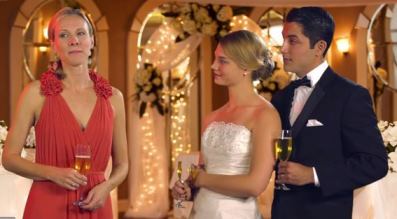 With wedding season approaching, happy couples from around the world are preparing to walk down the aisle and begin their lives together. Wedding season also marks the time when friends and family will be asked to give a toast to celebrate the occasion. For many, it may be the first time they are being asked to speak publicly, and, although it may be in front of friends and family, it can be an intimidating experience.
 The
The  The afternoon speaker at Saturday’s Northern California NSA Chapter meeting was our own chapter member from Eureka in the far north of California (and National NSA Board member)
  No member of the National Speakers Association speaks to as many people on a daily basis as does
 The world’s largest speech competition has launched with more than 30,000 contestants in 126 countries vying for the title of
  The National President of the NSA,