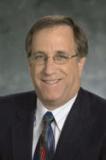
Bill Wittich: Speaking to Associations

Associations across America spend millions on meetings and events.

Bill Wittich Dr. Bill Wittich, incoming NSA Northern California President, shared his expertise Saturday on how professional speakers can market themselves to Associations. Bill spoke on the panel of experts at the St Patrick’s Day Pro-Track meeting.

Click on the podcast link below to hear Bill tell us why Associations are such a lucrative market and his secrets for networking your way into a speaking engagement.

Oddcast: globally speaking

Thanks to Brady for telling me about about an amusing Oddcast demo.

Oddcast does text-to-speech conversion. You can play with the nationality and sex of the speaker. Hear the same words spoken in the voice of Audrey or Charles from the UK. Then skip over to the USA and hear how Claire or Mike would say it. Next, switch to any one of a dozen other nationalities to hear Jolie or Bernard from France; Reiner or Klara from Germany or many others speak.

You could be boring predictable and type in a phrase like “You are so sexy” or more adventurous and cut and paste the text from a Robert Frost poem or the opening words of your next speech.

Beware, you can only play around a few times before the system thanks you for visiting and puts a stop to the fun.

Enjoy!

Internet Marketing Secrets

Mitch Gooze I went over to leafy Woodside last Saturday for a half-day NSA/NC mini-meeting featuring Mitch Gooze, an expert on direct marketing.

Mitch quickly summarized the received wisdom in the NSA – that if you have products (Books, CD’s, DVD’s, Special Reports etc) to sell both at the back of the room when you speak and from your website while you sleep you will increase your income above and beyond mere speaking fees. So far, so good.

Where Mitch went into new territory (for me anyway) was by pointing out that the heavy hitters, such as Randy Gage, make mega-bucks because they have more people to sell products to than anyone else. They’ve grown a mailing list of prospects who they then market to over the Internet. Mitch claimed Gage has over 150,000 qualified names on his list to whom he sells $80K worth of products in a weekend.

This is not spamming. It’s not multi-level marketing.

It’s capturing the names of visitors to your events and to your website and keeping in touch with them (via online newsletters, email updates and so on) so they’ll be a potential customer base for information products you develop and market to them.

Starry Night The stars must have been in alignment for me that evening. Lights went off, new vistas opened. Since Saturday I’ve discovered a whole world of expertise out there which helps drive anyone with information to share (give away or sell) to the largest possible online audience.

Want to know more?

I recommend checking out Fred Gleeck (enter your name and email on his site and download his 5 massive eBooks on Selling Info Products, Publishing for Profit and more), the Internet Marketing Podcast with Mike Filsame available on iTunes and Tom Antion’s Internet Marketing Programs.

None of these guys can make you an instant millionaire. It might take a few months.

What do you think? Too good to be true? Let me know if you have tried any of these programs and if they work for you.

National Speakers Association, Northern California Chapter, March Meeting

Creating a Bestseller and a Bestselling Career: 101 strategies and tactics

Gregory Godek Karyn Godek

Over 100 NSA/NC members and guests enjoyed a morning with the “NSA power couple� Karyn Buxman-Godek, CSP, CPAE, and Greg Godek, ABC, RSVP. One of NSA’s most romantic and successful couples shared their secrets for creating a “best-selling career� – combining public speaking and writing books. They promised to deliver the goods on how to:

  • Write books quickly
  • Create killer keynotes
  • Employ humor secrets from comedians and storytellers
  • Successfully and effectively market like a maniac
  • Generate speaking opportunities
  • Harness your creativity

Karyn has been a fulltime keynote speaker for 20 years. As humorist, she founded The HumorLab, an organization that researches the art and science of humor. Greg is best known for his 2.5-million-copy self-published book, 1001 Ways to Be Romantic. Around NSA he is known as the editor of the Writers PEG e-zine, and as a marketing maniac willing to brainstorm with anyone.

Karyn and Greg built best selling careers as information brokers by combining the best of both worlds. She’s a speaker who writes; he’s a writer who speaks. Between them, they cover a lot of territory. It is summarized in their list of 101 Strategies and Tactics for success — no matter if you are more comfortable holding the pen or walking the podium. In the hope that I won’t contravene the Fair Use copyright laws I’ll list those that impressed me – to get the full list you would’ve had to have paid your $70 fee to attend the event.

Jump off the cliff

Take risks with your business. Avoid paralysis by analysis. Mimic the software industry — release version 1.0 and then refine and re-release. Version 1.0 of a your book may be 3 pages each of 12 chapters that will expand and grow as you gather feedback from people you share ‘pre-publication’ copies with in exchange for proofreading and their suggestions about what to add. (NOTE: Some use a blog in the same way – as a test market for your ideas and a forum to gather feedback.)

Write a great title

Books like Who Moved My Cheese? and Men are from Mars, Women are from Venus are mega-hits because of their title. Likewise, those that people ask for in Barnes & Noble as that seven habits book or the Prophecy thing sell as much by virtue of their title as their content.

To test-market a title share the idea with your favorite Starbucks barista then casually ask the next time you are in there if they remember the title. If a couple of dozen strangers can recall it then you have a winner.

Invest in designing the book cover

People do judge a book by its cover. So invest in the services of a pro designer to create your cover. Avoid covers that scream ‘Self Published’ to the world. Greg finds it useful to ask his designer for three concepts:

  1. The cover you want
  2. The cover Random House would create
  3. A wild and crazy cover — within reason

Select the best font and images from these three and the result will be a killer book cover. The cover must address the audience. Be wary of putting your picture on it unless it’s a souvenir book (to sell from the Back of Room after speaking when the audience is fired up and wants a piece of you.)

Writing the book is the easy part

It’s all about marketing, positioning and branding. Publishing is a detail. Publishers are not really interested in selling books. They look first to grow their catalog with new titles. It’s your job to push product. Greg recommends negotiating long and hard to get a couple of thousand extra copies at cost + 10% (NOT wholesale – that’s one way the publisher rips off authors!). Use these books to power your publicity machine. Send a dozen at a time to local radio stations that will interview you and then give away copies to listeners who call in. Run a coordinated and relentless publicity campaign. Use the book to build your reputation and career. Professional speakers use their book to secure speaking engagements. Reach media people via the Radio-TV Interview Report. Use the book to generate articles about you. Tie into topics people are interested in. Coordinate with the annual cycle of news coverage (Valentines, Christmas etc.)

Speaking tips

As much as Greg told us about being successful in the publicity and publishing worlds, Karyn shared more about what makes a successful speaker. Writing might net you $1 a copy, speakers can command fees of $3-10K a speech. So you wanna make $100K a year? Do the math.

Look for humor in real life

Use stories instead of jokes. Funny means money. You don’t have to make stuff up – real life is full of humor. Audiences appreciate humor that makes you the fall guy. Most adult humor comes from pain. Triples are funny (A-one, A-Two, A-Three). Use funny words: “Chihuahua” beats “a dog”. Keep a humor file. Keep a file of ‘saver’ moments (for when things go wrong on the podium – lights fail, mike cuts out, PowerPoint goes black, you trip over). Get Jeanne Robertson’s book Don’t let the Funny Stuff Get Away and Terry Paulson’s book Making Humor Work.

Look for sponsors

If an event can’t afford your fees, get a sponsor. Local and regional sponsorships from major corporations are easier to come by than a national contract. Approach sponsors who want access to your audience. Tie the benefits of your speech back to product they wish to sell. Check out Aldonna Ambler’s talk from the 2oo4 NSA Convention on Corporate Sponsorship on the NSA website.

Look to improve

Invest in annual coaching. Invite other speakers to come see you. Join a Mastermind group. Always over-deliver. Stay active in the NSA. Read in your field and keep a clipping file. Study your competition. Use Mind Mapping to develop ideas. Show up to the conference early and attend other sessions. Track your topic with Google Alerts. Invest in an audio recorder and keep it with you.

Don’t read Shakespeare! Why speechwriters need to shout their speeches in the woods

Shakespeare wrote his plays for the ear, not the eye. His punctuation is sloppy, the stage directions minimal.

It’s much more difficult to understand one of his plays if you just read the text silently. It’s only when you read aloud, or, better yet, see the play performed, that the power of the words is evident.

Example: Read the text of Henry V’s inspiring speech to his men before they go into battle against the French:

WESTMORELAND

O that we now had here
But one ten thousand of those men in England
That do no work to-day!

KING HENRY V

What’s he that wishes so?
My cousin Westmoreland? No, my fair cousin:
If we are mark’d to die, we are enow
To do our country loss; and if to live,
The fewer men, the greater share of honour.
God’s will! I pray thee, wish not one man more
.
.
.
Rather proclaim it, Westmoreland, through my host,
That he which hath no stomach to this fight,
Let him depart; his passport shall be made
And crowns for convoy put into his purse:
We would not die in that man’s company
That fears his fellowship to die with us.
This day is called the feast of Crispian:
He that outlives this day, and comes safe home,
Will stand a tip-toe when the day is named,
And rouse him at the name of Crispian.
He that shall live this day, and see old age,
Will yearly on the vigil feast his neighbours,
And say ‘To-morrow is Saint Crispian’
Then will he strip his sleeve and show his scars.
And say ‘These wounds I had on Crispin’s day.’
Old men forget: yet all shall be forgot,
But he’ll remember with advantages
What feats he did that day: then shall our names.
Familiar in his mouth as household words
Harry the king, Bedford and Exeter,
Warwick and Talbot, Salisbury and Gloucester,
Be in their flowing cups freshly remember’d.
This story shall the good man teach his son;
And Crispin Crispian shall ne’er go by,
From this day to the ending of the world,
But we in it shall be remember’d;
We few, we happy few, we band of brothers;
For he to-day that sheds his blood with me
Shall be my brother; be he ne’er so vile,
This day shall gentle his condition:
And gentlemen in England now a-bed
Shall think themselves accursed they were not here,
And hold their manhoods cheap whiles any speaks
That fought with us upon Saint Crispin’s day.

(Act IV, Scene iii)

Now hear the speech as delivered by Kenneth Branagh.

Branagh’s voice brings out the nuance, subtlety and power of the speech that we miss when we just read the words.

The King literally brings his audience toward him from among the trees with a fine display of ethos – building a bond with the “band of brothers”. The bond is strengthened by contrasting their role with those “now a-bed”. He inspires them by painting in words a glorious future: their part in a story that will be told from “this day to the ending of the world”.

Very little of the power of the speech relies on gesture. Branagh is restrained. His fist is rigid, gloved and powerful. He relies instead on his voice, moderated at first, rising to a crescendo with the “ending of the world”. Then, seconds later, cracking to a whisper for “we few, we happy few” in preparation for the final lines delivered first with restrained humor, then mocking indictment and the final rousing claim which cues the troops to cheer.

Executive Communications Lesson

Find a corner of the office, or a space outside (perhaps in the woods like Henry), where you can read every speech you write out loud. Try reading it at different speeds. With different emphasis. Then, when you are happy with it, take it to your executive and make them do the same. You’ll probably have to insist, most speakers would rather skim the text in the back of the car on the way to the event.

But then, they never had to ask their audience to go fight the French.

Ragan Speechwriters Conference: Summing Up

Father McKenzie writing the words of a sermon that no one will hear
No one comes near.
Look at him working. Darning his socks in the night when there’s
nobody there
What does he care?

All the lonely people
Where do they all come from?
All the lonely people
Where do they all belong?

The Beatles ‘Eleanor Rigby’

Quick! What do HP, the AARP and the FBI have in common? No, it’s not geeky guys over 50 with a penchant for spying! Each of these organizations sent six or more speechwriters to the Ragan Speechwriters Conference.

The speakers at the event exhibited a love of French Generals and English Queens; I Claudius and Animal House. There were exhortations for writers to blog; speakers to stand sideways; calls for better rhetoric and simpler slides.

There was a fascination with great orators with three initials: MLK; JFK; FDR and WRC.

There were spooky representatives from the military-industrial complex: men and women from three-letter Agencies mixed with Canadian Space Agency people and guys and gals who were Proud to Be Americans.

At the other extreme there were free-associating consultants who Photoshopped salespeople with Beatles haircuts and billed their clients with a smile.

There were Fishbone Diagrams and Flesch-Kincaid Grade Level scales; baseline surveys and blogging platforms.

There was ethos, logos and pathos; decaf, regular and Earl Grey.

There was bone-chilling cold.

There were 250 people looking for the secret sauce so they can write the words of a sermon they hope someone will hear.

Gentlemen, he said,
I don’t need your organization, I’ve shined your shoes,
I’ve moved your mountains and marked your cards
But Eden is burning, either brace yourself for elimination
Or else your hearts must have the courage for the changing of the guards.

Bob Dylan ‘Changing of the Guards’

Ragan Speechwriters Conference: Day 3 – Hal Gordon

Hal Gordon: Bite the bullet—Turn your speaker’s liabilities into assets

Hal Gordon has been a professional speechwriter for nearly 25 years. His clients have included cabinet-rank federal officials, corporate CEOs and General Colin Powell. He’s also one of the few pro speechwriters who blogs – way to go, Hal!

The Speechwriters Slant

Good speakers, like good speechwriters, are made, not born. Some of the greatest speakers who ever lived have had to overcome a stammer, an accent, a natural shyness, a physical handicap or some other disadvantage before they could conquer a crowd. If your speaker has a problem, the best approach is not to duck it or paper it over, but to meet it head-on.

If you bite the bullet, you have a good chance of turning your speaker’s liabilities into assets.

This session promised that we’d learn how to:

  • Build our speaker’s confidence, if he or she needs it
  • Transcend race, gender, ethnicity, personal handicaps and other stumbling blocks to empathy between the speaker and the audience
  • Use humor to defuse tense situations—and the best kind of humor to use
  • Learn the oldest speaker’s gambit in the book—and why it still works. (If Shakespeare wasn’t above using it, we shouldn’t be, either)
  • Overcoming obstacles

    As speechwriters, we know that if we’ve got a good speaker as a client, we’re halfway home before we’ve written our first word.

    But what if we have a poor speaker? What if we have a speaker who has a lisp, a stammer or a distracting handicap of some kind? What if our speaker is shy, or not used to public speaking? Or what if we have a good speaker who is disadvantaged by circumstances? We have all had to write speeches for clients to deliver to audiences that are hostile to the speaker, or skeptical of his message, or both..

    Hal teased us by quoting the case of a politician who was seen as a village idiot, and had to give a speech to a skeptical audience. No, it wasn’t the current resident of 1600 Pennsylvania Avenue, but the Roman Emperor Claudius who addressed a hostile audience. “Senators, I understand you don’t want another Emperor, but you have been given one…As for speaking, it’s true that I have an impediment, but isn’t what a man says more important than how long it takes to say it.â€? Claudius takes each of his liabilities and turns them into an asset:

  • Yes, he says, I’m hard of hearing, but it’s not from want of listening.
  • Yes, I stutter, but isn’t what a man has to say more important than how long he takes to say it.
  • I’m considered a half-wit by some of you. But how come I’ve survived to middle-age with half my wits while many who have all their wits are dead. Evidently quality of wits is more important that quantity!
  • Another example of a speaker who triumphed magnificently over adversity is Churchill. he suffered both from a lisp and stammer and never fully overcame them. His devastating attack in the Houses of Parliament on Ramsey MacDonald in 1936 relied on a stammered pause before delivering the punchline:

    I remember, when I was a child, being taken to the celebrated Barnum’s circus, which contained an exhibition of freaks and monstrosities, but the exhibit . . . which I most desired to see was the one described as ‘The Boneless Wonder’. I never thought I would have to wait 50 years to see the boneless wonder now sitting on the Treasury bench.

    Other speakers use an accent to charm, as did JFK.

    Using Humor

    If you’ve got a good speaker and a hostile crowd, the speaker can often find something funny about the incongruity of the situation, and break the ice with a friendly laugh.

    Self-deprecating humor is often the best approach to take in these situations. It is also the safest, since no one can object if the speaker makes fun of himself for having a stammer or an accent – or for being unusually tall, short or heavy. Or even for being bald.

    Lincoln used self-depreciating humor – accused of being two faced he said “If I was, would I choose to wear this one?�

    Defusing hostility

    Example: Bush’s speech to the hostile crowd at the NAACP – a group he had avoided meeting until that point. He defused the situation as follows:

    Thank you very much. Bruce, thanks for your introduction. Bruce is a polite guy — I thought what he was going to say, it’s about time you showed up. (Laughter and applause.) And I’m glad I did. (Applause.)

    But what about those occasions where humor of any kind is, for some reason, inappropriate? That’s when you really have to bit the bullet and face the problem head-on.

    In one respect, there is no difference in writing for a hostile, rather than a friendly audience.

    Aristotle taught that there were three main devices for moving audiences – ethos, logos and pathos. They remain the same. We simply adapt them to the occasion.

    Rhetorical Triangle

    Ethos – building a bond with audience
    Logos – Appealing to reason and logic
    Pathos – Appealing to emotion

    The basics don’t change but need to be adopted when facing a tough crowd. Usually this means paying particular attention to Ethos.

    Dig into your speaker’s background to discover a link to the audience. John Hofmeister, CEO of Shell Oil, spoke to the NAACP in Houston. The crowd wondered if he was committed to diversity. Rosa Parks had died shortly before the speech, this jogged his memory. He recalled living in Atlanta in 1955. As a 5-year-old he wanted to sit at the back of the bus when in those days Whites were not allowed to. His grandmother supported him and they were thrown off the bus. When he recounted this story to the NAACP and said “I hope that in Heaven God will introduce my grandmother to Rosa Parks” he brought the crowd to their feet.

    Theodora The Byzantine emperor Justinian’s’ wife Theodora made a brief, telling speech under somewhat difficult circumstances: armed mobs were descending on the Palace and many of the nobles, plus her own husband, wanted to flee.

    Theodora begins with the acknowledgement that urging acts of daring was not considered womanly but nonetheless she took a tough line and urged defiance. Her husband might flee if he wished, but she would stay, for she liked the ancient maxim which said that royalty made a good shroud.

    My Lords, the present occasion is too serious to allow me to follow the convention that a woman should not speak in a man’s counsel. Those whose interests are threatened by extreme danger should think only of the wisest course of action, not of conventions. In my opinion, flight is not the right course even if it should bring us to safety. It is impossible for a person having been born into this world not to die. But for one who has reined it is intolerable to be a fugitive. If you wish to save yourself, my lord, there is no difficulty, we are rich, we have ships, yonder lies the harbor. Yet reflect for a moment whether you have escaped to a place of security, you would not gladly exchange such safety for death. As for me, I agree with the old adage that the royal purple makes the noblest shroud.

    She seized on her liabilities as a woman who stays to fight. The men in the audience could not flee when they heard this. When she had them by their manhood, their hearts and minds followed.

    I was struck by the ways in which female leaders such as Margaret Thatcher (the leaderine as the British Press called her) echo this. Thatcher’s cabinet were depicted as clustering around her like drones round a Queen Bee. She exploited the perceived ‘weakness’ of her sex by out macho-ing the macho. Are there not strong echoes of Theodora in her famous 1980 speech to the Conservative Party Congress:

    To those waiting with bated breath for that favorite media catchphrase, the “U” turn, I have only one thing to say. “You turn if you want to. The lady’s not for turning.” I say that not only to you but to our friends overseas and also to those who are not our friends.

    One wonders if America is ready to be taken to task by a Theodora, a Margaret or, dare I say, a Hilary?

    The Motivational speech

    Hal next asked us to consider the case of a new 27-year-oldgeneral giving a pep-talk to his men. They’ve not been paid in months. There’s no supplies or back pay. He’s inexperienced and they resent his appointments. Rumor is that he only got his job because his wife slept with the Minister of War. Napoleon (for it was he) was about to win his first battle with words not the sword.

    On March 27, 1796 he roused his army with these words:

    Soldiers, you are naked, ill fed! The Government owes you much; it can give you nothing. Your patience, the courage you display in the midst of these rocks, are admirable; but they procure you no glory, no fame is reflected upon you. I seek to lead you into the most fertile plains in the world. Rich provinces, great cities will be in your power. There you will find honor, glory, and riches. Soldiers of Italy, would you be lacking in courage or constancy?

    In this short speech he devotes first half to ethos. He’s unflinchingly honest about the situation. The same issues are faced by an executive having to discuss downsizing. He motivates them by the promise of looting. (This might only work on Wall Street and during the glory days of Enron). Note how he does not tell, he asks Are you men enough to take it? It’s probably a better rhetorical device for the VP of Sales than the CEO. His confidence in his destiny allowed him to take the risks. He gave his men hope. His rival Wellington said Napoleon’s mere presence on a battlefield was worth 40,000 men.

    The Aw Shucks Speech

    When all else fails the best option might be to say how bad you are at speaking. I’m not a speaker and I don’t pretend to be, I’m just going to give you the facts. This is the one bond you have with every audience. Everyone can identify with this. None other than Shakespeare used this device in the play Othello, who, when accused of beguiling the daughter of nobleman with witchcraft (would ‘twer that easy lads!) says he’s not an orator, he’s a foreigner, an outsider. The speech he makes in his defense is disingenuously effective:

    Most potent, grave, and reverend signiors,
    My very noble and approved good masters,
    That I have ta’en away this old man’s daughter,
    It is most true; true, I have married her:
    The very head and front of my offending
    Hath this extent, no more. Rude am I in my speech,
    And little bless’d with the soft phrase of peace:
    For since these arms of mine had seven years’ pith,
    Till now some nine moons wasted, they have used
    Their dearest action in the tented field,
    And little of this great world can I speak,
    More than pertains to feats of broil and battle,
    And therefore little shall I grace my cause
    In speaking for myself. Yet, by your gracious patience,
    I will a round unvarnish’d tale deliver
    Of my whole course of love; what drugs, what charms,
    What conjuration and what mighty magic,
    For such proceeding I am charged withal,
    I won his daughter.

    All speechwriters should enjoy poetry. Do you?

    Othello’s brave deeds on the tented field not pretty words acquitted him. Actions always speak louder than words, which is hard for speechwriters to admit.

    Many thanks to Hal for a most entertaining and educational hour.

    Ragan Speechwriters Conference: Day 3 – Tom Mucciolo

    Tom Mucciolo: Get physical: How to move beyond words and help your speaker master the more important keys to speechmaking

    Tom Mucciolo

    Speechwriters naturally care more about words than about style. And rightly so: Words are our jobs. Finely honed speeches can deliver verbal eloquence, but this is only half the battle. The MTV Generation audience focus more on the body language of the speaker than on the words he or she says. Across diverse cultures audiences get 55% of information from visual clues given by the presenter; 38% from how it is presented; a mere 7% from the content.

    Tom Mucciolo, CEO of MediaNet, a New York-based firm that teaches top corporate and political leaders how to combine words, visuals and delivery to create powerful presentations, is a recognized industry expert in visual communications, business presentations and leadership skills. He is the co-author of various books including Purpose, Movement, Color: A Strategy for Effective Presentations and a series on Using Microsoft Powerpoint.

    He delivered a fascinating session on the power of body language, eye contact, and theatrical gestures for enhancing the effectiveness of speakers.

    The session promised to teach the ways to:

  • Eliminate your speaker’s fear and anxiety by matching physical movement to content
  • Use gestures to control attention and increase the audience’s sense of interaction
  • Avoid common vocal problems and reduce distractions
  • Develop a seamless integration of technology and delivery
  • Mucciolo explained there are three aspects of every presentation: The Message – the things we have to say; The Visuals – evidence supporting this; the presenters Delivery Skills – supporting the lot.

    People are nervous before presenting because the words “I� and “me� go through their head (something we later heard bothers Homeland Security Czar Tom Ridge) – they focus on themselves, not the audience.

    Presenters need to know positioning and body language skills. These tips sound picky but it’s equivalent to a typo of body language not to be consistent. Executives freak over typos on slide — that’s only 7% of the information!

    Mucciolo’s checklist for effective presentations included:

    Positioning skills

    LEFT is Right

    Position the presenter to the left of the screen so reading patterns are honored.

    Stand at an angle

    The position of the body closer to or further from the audience raises or lowers intimacy. Become aware of the triangle formed with the presenter, audience and content. Move the body within this space to keep peoples attention. If the presenter is locked in one space the speech becomes ‘talk radio’, people tune out and Blackberry use increases. Move closer to the audience to grab their attention (and their hearts and minds will follow).

    A speaker behind a lectern is worst. If lecterns did anything, we’d wear them to work! They are security blankets for speakers.

    The exposure of the body is the highest form of skill for communicators. Emails and phone conversations can be misinterpreted since they are one-dimensional. People see bodies that move, understanding increases.

    Actors know how to use the tilt of the head alone to alter the tone a conversation. Tilt head back: big picture; straight on: basic information; lean forward: more personal. This works on the TV screen and in close ups for speakers in big auditoriums. Practicing this skill will feel awkward, but become more natural over time.

    Speakers need to take chances and move beyond their comfort zone.

    All in the shoulders

    45-degrees to audience is the rest position. Don’t stand squared on all the time, it’s just like yelling constantly, you lose impact. CAN YOU HEAR ME NOW? Stand squared on is your power position. Use it sparingly.

    Upstaging errors

    Don’t turn your back on the audience to read PowerPoint

    Being able to read is not a compelling skill.

    (And the less content visible to the audience on PowerPoint the more eloquence and power there is.)

    Don’t cross your body with your right hand

    This closes you off to your audience. Staying physically open increases your credibility and says to the audience Give me your best shot, go ahead!.

    Don’t tease, let them see your expertise.

    Crowd pleasing tips

    Welcome Hand

    Establish eye contact

    Reach out with open palms

    As welcoming as a handshake. Use it to invite audience feedback. Don’t just flip your palms. Hold the gesture.

    Phrase and pause

    Avoid fillers and excessive pacing which sows you are searching for the next thing to say.

    Talk to individuals

    Get agreement

    SMILE

    If you’re not having a good time presenting the audience won’t enjoy it. When you laugh your heart is open – it can’t be rehearsed, it’s an internal emotion, like tears. After a joke gets the audience laughing the presenter has a 30-second pass to say anything they want and it’ll go into long-term memory. It stretches the rubber band of the emotion.

    But don’t start a talk with a joke to break the ice. Whose cold, anyway? Use humor later on in the talk and remember that observation humor is better that canned jokes.

    Taking a stand

    Hands at the side, always shown

    This might feel awkward at first, but it looks best. The expert exposes the body. Use your hands to create speech that’s three-dimensional.

    Elbows and knees unlocked

    Feet shoulder-width apart

    Weight unevenly distributed

    Doctor and Patient This makes gestures look natural. More symmetrical actions are unnatural. Shifted weight conveys authority. Squaddies stand at attention, the top brass are all relaxed. The relaxed doctor gives the diagnosis to the upright, tense patient.

    What FEELS unnatural LOOKS natural. Presentations are not about you, they’re about the audience.

    Avoid the stance of the Gunfighter; Head waiter; 3rd Base coach; Conversationalist.

    There are only three possible relationships. We are all either:
    Clinton Wagging FingerThe Parent-Child
    The Brother-sister
    The Husband-Wife

    The famous moment on TV when Clinton scolded the interviewer who’d asked him if he’d had sexual relationships with Monica Lewinsky showed him acting as a parent. He realized a President is legitimate to the extent he’s perceived as a Parent. So, Clinton’s very specific gesture when denying sex with Monica was the parental wagging of a finger. An open palm response at that moment would’ve been asking for forgiveness and probably scuppered his Presidency.

    Speaking up: Tips on using your voice

    Be aware of the difference when you write for men vs. women.

    Females have big voice advantage – their lower center of gravity delivers a more melodious voice and can carry longer phrases. Men sound off key and do better with shorter phrases. Men should breathe between phrases but can project with better volume. Men can project to back of room while women sound shrill. Men should create interaction wherever possible. Women should pick a guy for an interactive question to make them sound good. Make your first interactive question one of opinion not of fact. If they get one wrong you’re out of favor.

    Your voice can help you get out of awkward situations. Use one of these three ‘E’ words to keep the audience on your side if you face hostile questions:

    Can you give me an Example, or Explain that or Elaborate on that.

    An audience member will want to be on their best behavior to gain points with fellow audience members. Don’t allow audience members to lose their dignity or lose face in front of their peers. Never ask them questions they’ll be wrong on. If they give an incorrect answer, rephrase the question.

    In summery, the three things an effective presenter should always do:

    1. SHIFT your weight
    2. SHOW the palms of your hands
    3. SHOW their teeth, smile to express energy and joy.

    And remember, go easy on The Man. Good coaches don’t try and change too much at once.

    Ragan Speechwriters Conference: Day 2 – Lunch Panel

    Networking Lunch: 30 ideas in 30 minutes

    Rueben Bronee – Government of British Columbia
    Fletcher Dean – Eastman Chemicals
    Richard Feen – Freddie Mac
    Bob Lehrman – Freelance
    Elizabeth Mitchell – Freelance
    Michele Nix – Office of Tom Ridge

    1. Use a simple Zen-like approach to writing.
    2. Audiences need to hear words that are short and familiar.
    3. Freelancers, know the company you work for: don’t FedEx a draft to executives at UPS.
    4. Turn track-changes on for drafts to allow the executive to see you’ve not ignored them.
    5. Use a ScriptMaster speaker box to manage script.
    6. Use music quotes as well as those from offbeat TV shows “Save the cheerleader, save the world�.
    7. Speeches are an oral contract with your organization, be careful what you say.
    8. Use Stephen Lucas’s The Art of Public Speaking as a template for success.
    9. Make speakers show they are passionate about a topic, don’t say “I am passionate about…�
    10. Develop a thick skin, don’t take things personally. They only yell at people they trust.
    11. Don’t agree to be on a panel after eating spinach. Find out if the speaker is on before or after the meal.
    12. Constantly listen to your speaker, whenever they are available. Use the speaking tones you hear in future scripts.
    13. Give feedback to executives to help them overcome challenges in natural speaking style or bolster goodness.
    14. Face-time is important. Don’t let VP of Communications wall you off (and so many of them will want to, won’t they?). You need to be able to ask the executive questions like “Tell me about your Dadâ€? to get true human stories.
    15. Don’t be afraid to punt on the podcast. Don’t just use technology for the sake of it.
    16. Take the time to remind yourself you can write.
    17. Include phrases in a speech that can be taken wholesale and quoted in press.
    18. Think twice about recycling speeches: like day old sushi it just smells bad.
    19. Keep speeches away from the lawyers. You own it.
    20. Bridge back to key messages in speeches at the end. Write two endings – one for the end of the speech proper, before Q&A and a second ending to hit them again with key messages.
    21. Get physical when you write a speech. Get up, walk around, take the dogs out, don’t become chained to the keyboard.
    22. Build in “How the Hell’s� into speech – references to group you are speaking to that are so specific they wonder “How the Hell did they know that?�

    OK, so I missed 8 ideas. Whose counting? And if you have one I did miss, please leave it as a comment below.

    Ragan Speechwriters Conference: Day 2 – Rob Friedman

    Rob Friedman: Motivating the troops: The speech to boost morale and convince people to do hard things

    Thanks to Rob for producing extensive handout notes which I’ve annotated as the main part of this blog report.

    Rob Friedman is a senior writer for Eli Lilly & Co. and a former editor of Speechwriter’s Newsletter. He’s been attending Speechwriters Conferences for over twenty years.

    “Reasons lead to conclusions; emotion leads to action.”
    – Neurologist Donald Caine

    Any organization going through change—in short, virtually every organization in the world today—needs leaders who can motivate employees to step up, overcome obstacles and achieve tough goals. But how to do it?

    Motivation and emotion share the same root – the Latin word to move.

    As with a persuasive speech, the goal of a motivational speech is to move an audience from one place to another. But while persuasion works mostly through logic, reason and argumentation, motivation – which aims at action – relies on emotions and feelings, such as pride, respect, belief, duty, fear and desire.

    Ten techniques that stir feelings and move people to action.

    1. Build a bond. Build the speaker’s credibility by establishing authority and empathy.

    People want to know you know what you are talking about and you are with them, that you are an empathetic expert. The odds of getting people to do difficult things increase if they feel those doing the asking know what they’re talking about and understand what it takes.

    Someone once said, “Morale is faith in the person on top.” Motivational speakers are authorities and experts. When college football coach Lou Holtz speaks on improving performance, he (or those introducing him) underscores that he inherited five losing teams and took them all to Bowl games within two years.
    Motivators also make clear that “We’re all in this together” – not you must do this, but we will do it together.

    Elizabeth I When Queen Elizabeth I visited her troops on the eve of the attack of the Spanish Armada, her authority emanated from the fact that she was the Queen. But she showed her bond by saying: “… I am come amongst you at this time, not as for my recreation or sport, but being resolved, in the midst and heat of the battle, to live or die amongst you all.”

    Her visit illustrates an important point about credibility: it’s built not on rhetoric but on actions.

    An executive who speaks heart-to-heart without notes shows how close to the audience they are. This establishes instant credibility.

    Having leaders who make sacrifices gives credibility when calling for change from other employees.

    2. Pump them up

    Napoleon Good motivators stroke the ego, tell people how good they are, inspire confidence that they can get the job done. When a client is asked to speak, find out about the group’s accomplishments and recognize them. One common technique is to “compliment and stretch” – recognize their accomplishments but urge them onward, as Napoleon did, exhorting his troops in the Italian campaign of 1796:

    “Soldiers, you are precipitated like a torrent from the heights of the Apennines; you have overthrown and dispersed all that dared to oppose your march … Yes soldiers, you have done much; but more still remains for you.”

    3. Light the burning platform

    People need a sense of urgency to be motivated to act or change. Better than the ‘don’t worry, be happy’ style, dramatize the magnitude of the challenge and the need to act now. State what is unacceptable. Dispense with the sugar-coating; give it to them straight.

    FDR On December 8, 1941, with the U.S.S. Arizona still smoking, Franklin Roosevelt addressed the nation:
    “We are now in this war. We are in it – all the way. It will not only be a long war, it will be a hard war … We don’t like it – we didn’t want to get in it – but we are in it and we’re going to fight it with everything we’ve got.”

    4. Stretch them

    To get high performance, you need to get people to do more than they believe they can. Among the ways to do this are to:

  • JFKSet high expectations, big challenges. Set standards for yourself higher than anyone else would set them. In spring of 1961, JFK committed the U.S. to landing a man on the moon and returning him safely to earth within the decade. The country had 12 minutes of human spaceflight experience when JFK made his challenge.
  • Stoke their pride: remind them how capable they are; tell them they’re part of a tradition, a legacy; describe why they’re better than the competition and why they’ll win. Patton does this. Vince Lombardi.
  • Appeal to something bigger than themselves. Describe how their accomplishment will make a difference to people; save the cause; uphold a moral imperative. Tap into whatever in your organization is bigger than individuals. What would world be like without your organization? Queen Elizabeth I. Russell Crowe in Master and Commander preparing his crew for battle: “This ship is England.”
  • 5. Examples to show them success

    Hero Identifying with high achievers helps people reach. Hold up a hero, an exemplar, or someone who has overcome adversity. Look into organizational history for inspiring stories. Hero was a character in Greek Mythology.

    Example:

    Wilma Rudolph Wilma Rudolph was born in Tennessee in 1940, premature at 4½ pounds. She suffered one illness after another and her left leg and foot were weak and deformed. Doctors told her she had polio and would never walk.

    But her mother never gave up on her. Unable to take her to the local hospital – which was segregated – she took her to a black medical college in Nashville – 50 miles away – twice a week for two years. Wilma was 12 before she walked without crutches, braces or corrective shoes.

    She then decided to become an athlete. She became a high school basketball star and track phenomenon.

    On September 7th, 1960, in Rome, Wilma Rudolph became the first American woman to win three gold medals in the Olympics. She won the 100-meter dash, the 200-meter dash, and ran anchor on the 400-meter relay team.

    She was named United Press Athlete of the Year for 1960.

    Cast your net wide; draw on examples of excellence in sports, the arts, business, exploration, leadership, your field and more. Exemplars can be institutions as well as individuals. Search the history of your organization for examples of heroic feats – and use them to motivate people to overcome current challenges.

    6. Show them the consequences of failure

    Some people crave winning; others fear losing. Many kids are motivated by the threat of “or else”.

    Patton fired up the troops by reminding them that “Americans don’t like to lose.”

    To keep the Catholic schoolboys in James Joyce’s Portrait of the Artist as a Young Man virtuous, the preacher paints a hell-raising picture of the agonies of hell.

    To motivate people to uphold the highest standards of ethics, describe the devastation caused by the leaders of Enron, Tyco, WorldCom, Cendant. Just mine the pages of the newspapers.

    Motivate by describing (among others):

  • The potential damage to your organization if someone bends the rules
  • The dangers if a law or regulation prevents your organization or products from helping people
  • The impact on society if your organization didn’t exist – or failed
  • 7. Tell them what you want them to do

    Be clear about the goals of the speech. Make sure the audience is clear about the action you want. Good leaders distill what is complex and make the actions seem doable. Enumerate the steps.

    MLK In August 1963, on the steps of the Lincoln Memorial, Martin Luther King was inspirational but also gave his followers explicit instructions:

    “Continue to work with the faith that unearned suffering is redemptive. Go back to Mississippi, go back to Alabama, go back to South Carolina, go back to Georgia, go back to Louisiana, go back to the slums and ghettos of our northern cities, knowing that somehow this situation can and will be changed.”

    GE under Jack Welch followed three priorities: globalization, services, and Six Sigma and quality. In each internal speech, Welch hammered home the actions employees needed to take to fulfill these priorities.

    8. Paint a Vision of future

    Show your audience why their struggle will be worth it – they will win, help humanity, be more fulfilled, sustain the legacy of a great institution. Paint the vision of the future, show what it’ll mean to accomplish the tasks.

    Again, King:

    “I have a dream that my four little children will one day live in a nation where they will not be judged by the color of their skin but by the content of their character.”

    Churchill Winston Churchill to the House of Commons, June 18, 1940, on the upcoming war against the Nazis:

    “Let us therefore brace ourselves to our duties, and so bear ourselves that, if the British Empire and its Commonwealth last for a thousand years, men will still say, ‘This was their finest hour.’”

    Eli Lilly executive Patty Martin spoke on diversity in a talk titled ‘Make Difference Matter’:

    One final question for each of you. What does success look like for you? I know what it looks like for me. I asked my daughter what she wants to be when she grows up. She answered, I want to work at Lilly, because you make good medicine. I want Lilly to be the kind of company in twenty years that will attract my daughter, motivate her and use every God-given talent she has to offer to help make great medicine. That’s what success looks like to me. That’s what matters to me. Ask yourself this question: what matters to you? And then, please, let that be your reason for doing everything you can to make difference matter.

    9. Conclude with the call to action or challenge

    Mine the preceding eight steps for ideas.

  • Restate the magnitude of the crisis or issue
  • Find the right quote, or tell a story of accomplishment that’s a metaphor for the action you’re asking for
  • Sum up your action steps – but then reinforce the impact of succeeding
  • Give them the reasons why they can do it
  • Remind them of a higher calling
  • Lilly CEO Sidney Taurel urging his leadership team to the hard task of transforming the company:

    “Now it falls to us to write a new and, I believe, luminous chapter in this story of transformation. As we set out, I want you to feel as I do that this is not what we are forced to do … this is what we are called to do. Let’s get to it!”

    10. Show your passion

    Ultimately a speaker’s passion can make the difference between motivating the audience and leaving them dispirited. This can be challenging for corporate speakers.

    Listen for your clients’ passions so you can incorporate them when they have to motivate. Learn what it is your speakers are passionate about. Write stories for them that will help. Listen to the clients. Write conversationally, drop the passive voice.

    Speaker training makes a big difference. Coach them to speak without notes and to make eye contact. Get a structure they’re comfortable with and encourage them to use their own words. Have them rehearse out loud. Passion shows up in the voice. Encourage them to show their passion. People are afraid of going over the top. There’s cognitive dissonance feeling goofy when it’s right on. Remind them what’s at stake.

    Find the human impact at the end of the desired action.

    At the end of the day have integrity. Temper good motivation with realism – drop the cheerleading. Be candid.

    Motivational Speech Samples

    Reading 1
    Queen Elizabeth I, visiting the troops at Tilbury on the eve of the battle with the invincible Spanish Armada, 1588

    “My loving people, we have been persuaded by some, that are careful of our safety, to take heed how we commit ourselves to armed multitudes, for fear of treachery; but I assure you, I do not desire to live to distrust my faithful and loving people. Let tyrants fear; I have always behaved myself that, under God, I have placed my chiefest strength and safeguard in the loyal hearts and good will of my subjects. And therefore I am come amongst you at this time, not as for my recreation or sport, but being resolved, in the midst and heat of the battle, to live or die amongst you all; to lay down, for my God, and for my kingdom, and for my people, my honor and my blood, even the dust.

    “I know I have but the body of a weak and feeble woman; but I have the heart of a king, and of a king of England, too; and think foul scorn that Parma or Spain, or any prince of Europe, should dare to invade the borders of my realms; to which, rather than any dishonor should grow by me, I myself will take up arms; I myself will be your general, judge, and rewarder of every one of your virtues in the field.

    “I know already, by your forwardness, that you have deserved rewards and crowns; and we do assure you, on the word of a prince, they shall be duly paid you. In the mean my lieutenant general shall be in my stead, than whom never prince commanded a more noble and worthy subject; not doubting by your obedience to my general, by your concord in the camp, and by your valor in the field, we shall shortly have a famous victory over the enemies of my God, of my kingdom, and of my people.”

    Motivational techniques she uses:

    – she links herself to her people, obliterating the distance with them
    – she appeals to national pride
    – she shows vulnerability and courage
    – she predicts victory
    – she’ll reward them with money

    Reading 2
    Napoleon exhorting his troops during the Italian campaign of 1796-7

    “Soldiers, you are precipitated like a torrent from the heights of the Apennines; you have overthrown and dispersed all that dared to oppose your march. Milan is yours; the dukes of Parma and Modena are indebted for their political existence only to your generosity.

    “The army, which so proudly menaced you, has had no other barrier that its dissolution to oppose your invincible courage. The Po, the Tessin, the Adds, could not retard you a single day. The vaunted bulwarks of Italy were insufficient.”

    “Yes soldiers, you have done much; but more still remains for you.”

    – The segue at the end both compliments and stretches the troops.

    Reading 3
    Sue Suter, former U.S. Commissioner of Rehabilitation Services, to New Zealand Rehabilitation Association

    “I contracted polio when I was two years old. I don’t remember it. But I do remember my parents telling me about the advice that the doctor gave when it was time to take me home from the hospital. He told them, ‘Just put her in bed. She’s going to be staying there the rest of her life.’

    “When I was in college, I decided to go after a Master’s degree in clinical psychology. But my career counselor advised against it. He warned that it was hard enough for a woman with a disability to get married. Having an advanced degree would only intimidate a man more.

    “When our son was born, the day before he and I were to leave the hospital a social worker visited me to inquire how I was going to possibly care for a newborn infant.

    “These were well-meaning professionals who believed that they knew what was best for me. But my life would be much different, and I probably wouldn’t be with you today, if I had followed their advice.”

    Reading 4
    Tim Russert at Commencement of the Catholic University of America’s Columbus School of Law

    “People with backgrounds like yours and mine can make a difference.

    “In Poland, it was a young electrician named Lech Walesa, the son of a carpenter, who transformed a nation from communism to democracy. In Czechoslovakia, a writer named Vaclav Havel, the son of an office clerk, who traded his pen for a podium and rallied his people to freedom. In South Africa, Nelson Mandela, a brave black man who worked his way through law school as a police officer, spent 28 years in jail to make one central point: we are all created equal.

    “All these leaders have one thing in common with you. Like the past, the future leaders of this country, of this world and of the legal profession were not born to the blood of kings, but to the blood of immigrants and pioneers.
    “Now it’s your turn.”

    Reading 5
    Sidney Taurel, Lilly’s 2006 Global Leadership Conference, on why his leadership will succeed in transforming our company

    “The road ahead will be tough – make no mistake about it. But it leads to a brighter future for those with the will and the skill to walk it.

    As we set off now, it may help to look back over our 130 years of history and realize that – as a company – we’ve traveled this way many times before.
    Over the years, the people of Eli Lilly and Company have repeatedly responded to a changing environment by bringing forth new technologies: insulin … polio vaccines … cephalosporin antibiotics … the first biotech products … breakthroughs in neuroscience.

    “At several points in our history, we have reinvented the company, along with our product line, evolving our business strategy to deal with new threats or opportunities – think of the creation of Elanco … the acquisitions of new business lines in cosmetics, medical devices, pharmacy benefits management … and then the subsequent divestment of these assets to refocus on pharmaceutical innovation … all of this is living proof of the vital capacity of the firm to learn and adapt and thrive in a world of constant change.

    “Now it falls to us to write a new and, I believe, luminous chapter in this story of transformation. As we set out, I want you to feel as I do that this is not what we are forced to do … this is what we are called to do.
    Let’s get to it!”

    Reading 6
    Dr. Robert McAfee, inaugural address as president of the American Medical Association, framed as a conversation with his son, who had recently begun his own practice as a physician, June, 1994

    “One last piece of advice.

    “More than anything else, I want you to remember to be a good physician, a good doctor. I want you to listen to your patients. I want you to touch them every day on your rounds. Hold their hand. Squeeze their shoulder. Pat them on the back. Look into their eyes.

    “Remember how lonely that person is; remember how lonely you were when you were a patient. Don’t be afraid to sit down with that patient rather than stand at the end of the bed. That small gesture can make such a big difference. Remember to take the medical chart into the room with you, and write your medical progress report in the patient’s room – it’s so much more meaningful.

    “Don’t forget to smile – it’s awfully important. And don’t be afraid to cry. Sometimes when you are alone with the patient, when you remember a special patient, a colleague, a loved one; sometimes when you are with the family, sometimes when you are home alone, sometimes in those quiet moments. Don’t be afraid to cry. It’s okay.

    “And don’t forget to call the family. Not just when big victories Occur – but sometime, some day, when there isn’t any reason. Just to say, ‘How are you getting along at home? Mother or dad is doing fine – be home in a few days – are you ready for them? How do you feel about things? Is there anything we can do for you?’”

    Reading 7
    How to tell a story

    A man traveling across a field encountered a tiger. He fled, the tiger after him. Coming to a precipice, he caught hold of the root of a wild vine and swung himself down over the edge. The tiger sniffed at him from above. Trembling, the man looked down to where, far below, another tiger was waiting to eat him. Only the vine sustained him.

    Two mice, one white and one black, little by little, started to gnaw away the vine. The man saw a luscious strawberry near him. Grasping the vine with one hand, he plucked the strawberry with the other. How sweet it tasted.

    — Buddhist parable