Ragan Speechwriters Conference: Day 1 – Angela Sinickas

Angela Sinickas: A practical guide to measuring the effectiveness of executive communication

Angela Sinickas

Twenty early birds took advantage of this pre-conference session presented by Angela Sinickas. She’s president of her own communication consultancy and the author of How to Measure your communications programs and a regular columnist for Strategic Communication Management Magazine. She’s a pioneer in the field of organizational communication measurement and has been measuring the effectiveness of communications since 1981.

This was a great session for corporate speechwriters, communications managers and internal communications staff who have faced skeptical managers with one eye on their function as a potential ‘cost center’ which practices the squishy art of wordsmithing and does little to contribute to the bottom line.

It’s all very well to say speechwriting is an art and the measure of good speechwriting is a satisfied client. But what do you say when your executives tire of the road—talking to yet another group on yet another topic—and ask if it’s really worth their time … or worth spending all that money on speechwriters?

Angela promised to outline simple research techniques that can give ammunition for anyone who needs to show executives the business value of staying in front of all those key stakeholders. The class brochure made some pretty impressive claims, including:

  • How to use a quantitative evaluation form to decide which outside speaking opportunities would be the most productive for your speaker—before you send the executives out
  • Identify the topics your audiences want to hear about from senior executives—and which subjects are better handled by other subject matter experts in your company
  • Focus on the messages that are most likely to make an executive’s speech lead to desired business outcomes
  • Measure the impact of speaking engagements on audience knowledge, attitudes and behavior, including some techniques that cost nothing and take very little time
  • Objectively assess which executive spokespersons are the most effective in talking with the media
  • Find the right balance between written and oral communications from executives using research
  • Quantify to what extent the face-to-face communication “cascadeâ€? actually works in flowing information from executives to line employees within an organization
  • A quick poll at the start of the class showed that we wanted answers to a variety of familiar questions including how to meet requests for ROI measurement; how to filter a multiplicity of speaking requests; how to prove worth and value of exec comms; how to make what we do seem more valuable; quantify performance; gather the right metrics; measure the impact of new media and more.

    Planning and Measurement

    Angela began by advising us what NOT to measure:

  • Merely counting the number of speeches. This is a laundry list which does not reveal what happened at the events
  • Just checking on increases in awareness on a topic without a baseline
  • Unrelated cause/effect pairings (such as speeches and sales)
  • Better to measure:

  • Things that connect to an organizational goal
  • Aspects of the event which connect to the goal – it may just be to increase awareness, that’s OK
  • Attitudes that the communication affected
  • The effectiveness of different channels of communication to reach the goal
  • When measuring communications objectives move down this list for better results:

    1. Activities: Just measuring the number of speeches
    2. Attitudes & audience perceptions
    3. Behavior changes – actions taken
    4. Financial impact on organization goals

    Just by asking these behavior change questions can help you clarify the value of a speech; should the executive even do it? These questions will highlight if there’s a call to action included anywhere in the speech outline.

    Follow a linear path of reasoning to step up your appeal to the left-brained engineers and scientists we often support. It helps them see how the holistically right-brained speechwriter arrived at the messages we script for them:

    1. Identify stakeholder groups
    2. Identify their “stake�
    &#160 a. Why are they a stakeholder?
    &#160 b. What group are they part of?
    3. Identify their current behavior and ideal behavior to reach goal
    &#160 a. Are they customers already?
    &#160 b. Are they customers of the competition?
    &#160 c. Have they ever been customers?
    4. What knowledge affects their current behavior, where do they get this knowledge?
    &#160 a. What messages and basic facts affect current knowledge? What do their heads need to know?
    &#160 b. What current channels deliver facts in best way?
    5. What attitudes affect current behavior and where are these attitudes reinforced?
    &#160 a. What attitudes affect messages? Above and beyond ‘facts’ what do their hearts tell them?
    &#160 b. What channels affect attitudes: compelling face-to-face interaction, perhaps emotive video?
    6. What knowledge and attitudes affect ideal behavior, which sources are preferred?
    &#160 a. Same as for 4a/b and 5a/b for Ideal future
    &#160 b. What would it take for you to change this behavior?
    7. What research will help answer these questions?
    &#160 a. This does not have to be formal research.

    Angela then had use divide into small groups and experiment with the technique. The feedback given afterwards was:

  • This is easier to do as a group, other communications people gave it perspective. It would be useful as a team exercise in a large corporation or in an ad-hoc professional organization like the Washington Speechwriters Roundtable.
  • There will be many stakeholders, each with their own issues – survey as many as possible – this involves an increased investment of time.
  • A major event may require a full-blown process. Small shifts can be helped with parts of the process. It’s worth asking some questions to help the speechwriter get the right key messages included, rather than what the executive wants to say.
  • Research is only as effective as the speaker’s willingness to receive it. Are they willing to have someone tell them they have spinach between their teeth?
  • Post-event surveys can gauge how an audience’s knowledge, attitudes and behavior has changed.

    Measurement can be made along the axis of:

    1. Satisfaction – “Do you like me?â€?
    2. Efficiency – time and budget, in context
    3. Effectiveness – do messages achieve objectives?
    4. Outcomes – change in objective reality, not just opinions.

    And across:

    1. The activities of the communications event
    2. Audience Perceptions
    3. Changes in audience behavior
    4. Financial impact

    Tools to use

    A simple trick is to turn on the Flesch-Kincaid Grade Level test for readability in Microsoft Word under [Spelling and Grammar] [Options] [Show readability statistics] and make sure you are writing at a grade level sufficiently clear enough for members of your audience to understand. (This blog entry scores a 51, right around where Time Magazine sits.)

    Speechwriters can also measure number of times concepts like ‘Brand’ are used in an annual count of speeches or articles. Simply do a word count for key brand attributes, examine the totals in a given period of time as a percent of total communciations for that period.

    Interviews and focus groups can help ID messages that people want to hear. Quantify on a scale of 1-5.

    Conduct baseline surveys before a speech – allow respondents to see what others think.

    Knowledge quizzes should always include a ‘Don’t know’ response.
    Take pressure off them feeling dumb in the way you phrase questions.
    Do this at the event or online via web. Online surveys can let them click after they respond to see others’ results.

    Use the well-respected Starch test from the field of advertising to measure the effectiveness of different forms of communication:

    Soon after speech ask if they:

  • Snoozed
  • Remembered
  • Listened
  • to different segments of the presentation.

    Measuring different channels

    Measure pure volume – how many speeches are given at different times of year, measure percentages each quarter. Ask: Are these at best time for our industry and business?

    Measure content pf speech against things like revenue. This is more sophisticated than just measuring content in terms of brand attributes.

    Measure preferred and ideal sources of information.

    Outcomes

    Use demographic questions to see which variety of executive communications the audience has been exposed to. Then look at levels of favorable results and compare and contrast those who’ve been exposed to specific communications.

    Measure percentage differences of those exposed to different forms of communications.

    The Wizard of Ads: An Inspiration to begin a journey

    I’ve found inspiration as a speechwriter in the writings of Roy H. Williams. “The Wizard of Adsâ€? brilliantly analyses the impact of advertisements and other forms of communication. His wide-ranging ideas are sourced from fields as varied as neuroscience and historical analysis; mountaineering, religion and art. His three books in the Wizard series are a must-read for anyone interested in the impact of language on audiences, on sharpening their tools of persuasion.

    Wizard of Ads

    HINT: When reading, mentally find and replace all occurrences of ‘advertising’ and ‘ads’ with ‘speechwriting’ and ‘speeches’. Example:

    Speechwriters typically assume that people are seeing and hearing their speeches. Yet rarely is this the truth. In reality, the content of a speech that gushes toward the mind is like a fire hose aimed at a teacup: there’s simply too much coming at us to contain. Most of the information aimed at the brain is deflected, spilled, lost. At the end of the day precious little information is retained.

    Will your speech be part of that precious little, or is it being deflected, spilled, lost?

    The Journal of Cognitive Neuroscience is a publication read primarily by doctors and medical students who want to understand how human beings recognize and identify objects; use visual mental images; read, produce, and comprehend language; move and store new information in memory; and many other such things. (I think it makes sense for speechwriters to read this stuff, too.)

    Modified from Secret Formulas of the Wizard of Ads, p48

    Williams does not shy away from deep science to explain business behavior. He’s inspired me to embark on a series of blog entries I’ll categorize as the “Deep End” of speechwriting and public speaking. I plan to undertake an extended journey into academic theories (Sociology; Rhetoric; Criticism; Semiotics) and see what I can find that is of practical use in my day-to-day work as a speechwriter.

    I’ll still comment on the “Shallow End” of executive communications and write on the lighter side of life. All work and no play makes Ian a dull boy.

    Jane Genova on the value of blogging

    Interesting post from Jane on the value of blogging in establishing a personal brand for old-media types wanting to break into the new world of social media:

    Start a blog with Typepad.com. It only costs five bucks monthly and, again, gets you into new space. Progress on the learning curve takes about three months but, not to worry, you have a survival job or two, right. Having a blog is the new cost of entry. And while you’re blogging your heart out, learn about bells and whistles such as video feeds and digital photos. Will this be exhausting? Yes, the new economy hath murdered sleep.

    Some might find that the advice to journalists and speechwriters also applies to old-school public speakers and seminar leaders who limit their activity to face-to-face presentations to live audiences and don’t leverage their content with blogs, video feeds, DVD’s, CD’s and other ways to broker knowledge in a digital world.

    Davos: Dialog in the Dark

    Davos at Night In one of the kookier news stories to come out of the mountain-top retreat at Davos this week, a German DJ proposes to subject executives to sensory deprivation in a totally dark room for an experiment in communications called Dialog in the Dark.

    Participants will enter a totally dark room where they will only be able to communicate by sounds. All visual stimulation will cease. The man behind this experiment, Andreas Heinecke, notes that

    The environment is nothing special for the blind people who are there to help them, but it’s a real shock for executives who rely on their egos and physical presence. . . They will have to listen closely, something most powerful men find difficult to do.

    In what will obviously be a PowerPoint free zone one can only hope executives will experience what audience members at tedious keynotes have long enjoyed: a few moments without unnecessary visual stimuli. It’s known as a nap.

    A Cingular Moment

    First, a disclaimer. Cingular is a wonderfully reliable cell phone provider. Our 4-line family plan is a bargain and I have absolutely no complaints about the service. That said, pity the poor CEO of Cingular, Stan Sigman, who discovered to his cost at the recent MacWorld in San Francisco that Steve Jobs is a hard act to follow.

    Within a day of the Jobs keynote, communications blogs exploded with an analysis of the failure of the Cingular CEO to come up to the mark during his time on the podium.

    First, blogger Seth Godin posted a scathing report which called attention to the speaker’s failings in both style and content (or soul and substance):

    Stan sure could use some help. He’s dressed all wrong. Not buttoned down enough to be a CEO, not casual enough for the Valley. And his jacket fits funny. Sort of like he’s at his son-in-law’s second wedding.

    Stan gives his talk from 3 x5 index cards, which he holds awkwardly on stage. And he doesn’t really say anything.

    This was picked up by the Dale Carnegie Training Center blog which posted the YouTube video and let us see for ourselves what Sigman does that stands in stark contrast to Jobs:

    Sigman enters 4:30 into the clip above.

    The Dale Carnegie folks place the blame at the feet of the communications team at Cingular who advised their CEO (the Executive Communications team that is, not the guys who give us dial-tone):

    Who advised Stan? Here is where they should have been:

  • Use a teleprompter or earpiece.
  • Practice, practice, practice.
  • Talk to the lawyers again, there must be a better way.
  • Practice
  • Don’t say it at all. Give us your heart and enthusiasm then sit down. Leave the rest for the press release.
  • I hope Stan is surrounding himself with people that can be honest with him. This is another testament on how critical presenting yourself is in business.

    Next, Garr Reynolds picked up the story, and drew a telling contrast between the Cingular CEO and Jobs, Google’s CEO, Dr. Eric Schmidt, and Yahoo co-founder Jerry Yang. A picture gallery shows the contrast:

    Four speakers

    Reynolds suggests it’s the use of the notecards that scuppered the talk. I disagree. In my stint as Scott McNealy’s speechwriter, I created bullet-point notecards for Scott to use onstage. He was relaxed and confident using them. Indeed, he relished using them as a prop in Tonight Show-style “Top 10 List” gags that the audience loved. He’d toss the notecards aside accompanied by goofy sound-effects:

    Scott McNealy

    Some speakers clutch the slide clicker as a security blanket, others grab onto a pen or a pointer as an outlet for nervous tension. Notecards in and of themselves are not the problem, inadequate preparation and coaching in their use is.

    Notice, by the way, that we provided Scott pale blue notecards which show up better on camera. The Cingular team gave their man the bright white ones that cause glare.

    As Reynolds concludes, we can all learn from Stan Sigman’s mistakes:

    My only point in highlighting his short speech was to show what the rest of us must never ever do. Like it or not, our customers, employees, and colleagues judge us in part on our ability to stand and deliver a successful talk. Stan Sigman’s performance was a wonderful textbook example of what not to do. We must find our own voice and our own style, of course, but we must never make the same mistakes made by Mr. Sigman.

    Finally, Bert Decker contrasts Martin Luther King’s “I Have a Dream” speech with the content we’ve discussed above. This is a low blow. We’d all come off the worse for comparison with the great orators. However, Bert is right on when he says it is to the world-class speakers we need to look for inspiration.

    That, and a good speech coach, can make all the difference. And thinking twice before you follow Steve Jobs onstage.

    National Speakers Association, Northern California, January Chapter Meeting

    Nearly 100 NSA members and Guests gathered at the Airport Clarion on a cold January day for this Chapter meeting. Around 40 stayed for the ‘Members Only’ afternoon session. If you were unable to attend, or were not qualified to participate in the afternoon, this blog is a source for some of the substance you missed. The warmness of the soul of the meeting has, alas, flown.

    Dan Burrus, CSP, CPAE: Shaping Your Future Today

    Dan Burres

    Dan Burrus’ speaking career has been nothing short of amazing. Starting as a high-school science teacher he spent two years giving 200+ presentations a year to school assemblies. He underpriced himself to get exposure and experience. He’s now at the top of his game. He has appeared on programs such as Larry King Live, PBS, and CNN Special Reports, and is often quoted in publications like Fortune and Industry Week. The New York Times has referred to him as one of America’s top three business gurus in the highest demand as a speaker. He has delivered over 2,300 keynote speeches worldwide, has authored ten audio cassette albums, several video tape programs, seven books, including his best seller Technotrends which has been translated into over a dozen languages and he publishes a variety of technology publications, including the Technotrends Newsletter.

    A few years ago, he launched several innovative electronic newsletters, and as a side note, the least expensive is $120,000 per year! In addition, Dan is a strategic adviser to CEO’s from some of the largest companies in the world. How did he do it? Dan shared his insights and strategies for growing a speaking business.

    Dan advised us not to pick a hot topic, but pick something we are passionate on and turn it into a hot topic. It’s not the subject that’ll make you a success as a speaker, it’s you and your expertise.

    On his road to the top, Dan self-assigned himself difficult venues: speaking to blind people, deaf people. This prepared him for, among other things, business presentations delivered through interpreters. Assigning stretch goals will cause you to grow.

    When Dan saw NSA’er Nido Quibein speak in the early 80’s and heard him state he made $1M+ from speaking he realized it was not Nido’s skills as a speaker that generated this wealth, but but the way he treated speaking as a business.

    Dan pitches himself one or two notches below his capabilities and then overdelivers. Often speakers pitch topics that are just not salable (“I open people up to their sense of childlike wonder”). This might be the essence of what you deliver, but you should promise something more prosaic, something that solves a need the audience can identify.

    Using lateral thinking can give audiences a unique solution, as when an Insurance Company told Dan they wanted to be in top 10 by revenue in five years time. He suggested ways they can be in top 10 on scales that others may not measure, and achieve these goals far sooner. On another occasion he changed the mission statement for a company from “We’ll be the best media and entertainment company on the planet” to “We’ll be the best media and entertainment company for the planet.” The outside speaker can make simple and effective suggestions like this that over-deliver on expectations. Did they hire you to change the mission statement? No. Was this a suggestion that added value? Yes.

    Speak on eternal truths, that way you don’t have to update your content all the time!

    Writing a regular newsletter (or blog!) can introduce the discipline of putting your thoughts on paper.

    Dan’s made two predictions for the future for the speaking biz:

    [1] As the triple curves of Moore’s Law, Gilder’s Law and the explosion of storage capacity converge into vastly improved technological capabilities look for a growing market of speech nuggets to be delivered over mobile devices. Content will be king. Partner with the providers to charge for your content. Look at pay-per-view for small segments of a speech. Start by loading your content on YouTube. Dan’s not the first to notice this convergence, but he’s the first to challenge speakers to take advantage of the opportunity.

    [2] Check out this new company which provides a solution for streaming live events over the internet. This offers technology that can expand any audience nationally and internationally. Ask who might want to pay $10 for your keynote in real time. Perhaps the next NSA National Conference can use this technology for members not able to make it to San Diego!

    Lenora Billings-Harris, CSP: What’s Your Inclusivity Quotient™? Removing the Barriers that Block Your Messages

    Lenora

    National NSA President, Lenora Billings-Harris, CSP gave a fun, interactive and non-judgmental session to help enhance our inclusivity quotient so our soul and substance can be fully received by everyone in the audience.

    NSA’ers used to ask, “Do I have to use humor”? The answer was, “Only if you want to get paid.” Now the same answer applies to the question, “Do I have to understand my group’s differences?” The answer is the same. Corporations and professional associations are investing millions of dollars each year to make their organizations more inclusive. They assume consultants and speakers already have the same sensitivities they do. Lenora’s session was jam-packed with immediately applicable information and suggestions, including a multi-page handout/reference guide. Her aim was to help us:

    1. Enhance our own multicultural competencies as a speaker.
    2. Identify the training and presentation techniques that help learners feel respected and included.
    3. Explore the most common multicultural barriers in the learning environment.
    4. Explore ways to evaluate our current programs to identify possible oversights, and then utilize techniques and resources to address them.

    Lenora opened with the Zulu invocation Ubuntu Ubuntu Ubuntu/em> which can be translated as I am what I am because we are. Audiences want to know us, not just the information we are there to share. They want soul as well as substance. So Lenora shared: her age, child-free status, husband’s foibles, birthplace and potted history of per life. In doing so she reinforced the professional bio of the formal introduction, by the irrepressible Karen Walker-Tunoa, with personal details that allowed us to connect with her.

    She modeled other best practices such as:

    – Allowing the audiences other ways to respond than raising their hands (people with restrictions on the use of their limbs are not excluded)
    – Engaging the audience by using (with permission) photos of key members in slides.

    As professional speakers we spend time, money and energy learning our craft. We also honor a code of ethics that sets us apart from the merely public speaker.

    Lenora’s statement for valuing diversity and inclusion as a speaker:

    Demonstrating the willingness and ability to recognize, understand, and respect the unique talents and contributions of all individuals, regardless of their packaging.

    Audience participants variously identified key words as respect, contributions, recognize and packaging as key to this statement. Lenora pointed out that the statement built on the word that preceded it.

    Share the Wisdom

    The afternoon session kicked off with Dan Burrus asking the 40 members what issues they are dealing with. The questions raised were:

    [1] What about blogging?

    A great way to put yourself out there. Dan has two blogs. One on his website. The other on Blogger owned by Google which increases your page rank. No rule as to how many times you need to update it. Find what you can do, what’s comfortable for you. Take timeless chunks from past material and post periodically. Ric Giardina uses WordPress so that his blog has become the center of his website. Any changes are reflected via the blog to the rest of his web. If blogging is the center of your activity it makes sense for this to be the center of your website, for others it might not. Blogging can reference the website and visa-versa. It’ll be driven by content – timely materials will elevate your visibility.

    Jerry Gitchel did a teleseminar on blogging and referenced keywords.

    I pitched the nsa_bloggers Yahoo Groups for anyone who needs to know more. Subscribe here if you are a speaker interested in blogging.

    [2] Coaching kids for tests – how to use technology for cell phones with cameras. Should I partner with Apple or the Bill & Melinda Gates Foundation?

    There’s a goldmine in the No Child Left Behind Act – see what funding your solution qualifies for. An Association might be a suitable partner. Example: The Association for Curriculum Directors will publish your book and give it as a member benefit to 110,000 members which the author makes nothing on, but has the rights for money from re-orders.

    [3] How did you build your speaking career? What were lessons in hindsight?

    Focus on relationships. Realize you have no relationship with a Speaker Bureau, you have a relationship with the PEOPLE in a Speaker Bureau. Relationships with people are based on trust. It’s about values.

    [4] What about the handout we were given on strategies and technologies?

    See if these impact your speaking business.

    [5] How do you balance speaking and other sources of income?

    Be true to your long-term goals. It’s not all about the money. Take vacations, even if they cost you big-time in fees. Example: skip the problems. Dan consults with companies but does not do paperwork. He asks companies to have their best guy in the room when he speaks with the CEO to write up a report he’ll approve.
    Since he started as a teacher he loves long vacations and kept the basic teacher principle of summers off.

    [6] What suggestions for getting a career in keynoting launched from a lifetime consulting?

    We can all do keynotes, training and workshops. But they take different skills. A keynote is only a keynote and you’ll only go so far. Get good fast with low fee / no fee start-up plan. Develop your skill by doing it.

    Look for your unique entree. Most executive suites are dysfunctional families so a family counsellor can sell their skills in the business world by finding the link that fits their pain.

    [7] What does the future hold for professional speakers?

    A bright future. There’s nothing to substitute for the presence of people, even the highest end video conferencing. Speakers reach inside a person and touch them to change their behaviors. Dan wants to change the way people think about their future, to use technology for a brighter future. Eyeball to eyeball is the most powerful change technique. Example: Dan is working with Hyatt to enable dinner tables with high-definition screens. This would allow you to have dinner with Mom who might be seated thousand of miles away. But the rapport and trust must be established first. Speaking remotely does not allow you to do this.

    [8] Free teleseminars – how to follow up effectively with anyone who was preregistered?

    (Jill Lublin uses them to sell a course).

    You get the behaviors you reward. What reward are they getting / not getting that affects behavior.

    Closing advice: Make an appointment to sit down for 1 hr a week and think about your future. What do you know? Strategies based on knowledge are less risky than those based on the unknown. Shift out of crisis management into opportunity management.

    After Dan left there was a wide ranging discussion on techniques which better connect the speaker with the audience:

    [1] To connect with an audience of kids – change things quickly, use music, don’t speak down to them. 15-year-olds use 5 technologies every day. Be yourself. No age sees though B.S. more than student age.

    [2] To connect with any audience – stand by door, walk among them as they enter. Get invited to social events before the event. Even stay for the whole conference, hang around. People appreciate it.

    [3] Key people in the audience are willing to give you information and background on audience.

    [4] Newsletters and content emailed to audiences are valuable. Blogs are two-way conversations that extend written communication.

    [5] Try and remember names of small training groups. Memory techniques can assist. This impresses them. Using someones name is a great way to connect. Use cultural sensitivity when dealing with people’s names.

    [6] Be wary of pre-programmed questionnaires. Better: Use telephone interview to ask people relevant questions.

    [7] Look for characteristics of group – things you might have in common with them will help create community. Learning even one or two words of a foreign language will help with overseas audiences.

    [8] Share your process, mistakes, vulnerabilities. Talk about your history. Tales of rejection, failure. Have courage to talk about these things to connect with you.

    [9] Survey the room: Ask people the experience they have on this topic. Their combined experience will exceed yours.

    [10] Be clear on expectations. Make sure the audience knows what you’ve been hired to speak on.

    [11] Connect with people at a human level. Practice Relational Presence.

    Orwell on language

    Yesterday I heard the wordsmith of the Republican Party, Frank Luntz, on PBS’s Fresh Air extol the virtues of George Orwell’s essay Politics and the English Language. He begged anyone interested in the real meaning of Orwellian to read it.

    Orwell

    Ignoring the delicious irony of a master of propaganda twisting the common use of Orwellian away from the Newspeak of 1984 (of which he is a modern practitioner, advising phrases such as “Responsible Exploration For Energy” over “Drilling For Oil”) I enjoyed the ruthless clarity of Orwell’s essay.

    It has a lot in common with more recent indictments of political and managerial cant found in books such as Why business people speak like idiots and Gobbledygook.

    Orwell discusses why “the slovenliness of our language makes it easier for us to have foolish thoughts”. He shows how, especially in political and business speeches, “prose consists less and less of words chosen for the sake of their meaning, and more and more of phrases tacked together like the sections of a prefabricated henhouse”. Dying metaphors, meaningless words and a preference for the passive voice over the active are listed as common ways we avoid the real mental effort involved in writing clear prose.

    Corporate communicators will recognize this passage describing the tired familiarity with which many executives speak from the podium:

    When one watches some tired hack on the platform mechanically repeating the familiar phrases … one often has a curious feeling that one is not watching a live human being but some kind of dummy: a feeling which suddenly becomes stronger at moments when the light catches the speaker’s spectacles and turns them into blank discs which seem to have no eyes behind them. And this is not altogether fanciful. A speaker who uses that kind of phraseology has gone some distance toward turning himself into a machine. The appropriate noises are coming out of his larynx, but his brain is not involved as it would be if he were choosing his words for himself.

    Orwell challenges us to make a difference.

    A scrupulous writer, in every sentence that he writes, will ask himself at least four questions, thus:

    1. What am I trying to say?

    2. What words will express it?

    3. What image or idiom will make it clearer?

    4. Is this image fresh enough to have an effect?

    And he will probably ask himself two more:

    1. Could I put it more shortly?

    2. Have I said anything that is avoidably ugly?

    His rules of composition are clear and uncompromising:

    1. Never use a metaphor, simile, or other figure of speech which you are used to seeing in print.

    2. Never us a long word where a short one will do. If it is possible to cut a word out, always cut it out.

    3. Never use the passive where you can use the active.

    4. Never use a foreign phrase, a scientific word, or a jargon word if you can think of an everyday English equivalent.

    5. Break any of these rules sooner than say anything outright barbarous.

    Would that it were so.

    Ford Motor Acceleration Tour

    If it’s good enough for Pro-Track, it’s good enough for Ford Motors.

    One of the guidelines for emerging speakers in this year’s NSA Pro-Track class was to establish a toehold on the “Animal Circuit” — speaking at neighborhood Lions and Kiwanis Clubs. They don’t pay squat, but they provide a newbie speaker with a ready audience to try material on.

    Ford F-Series So I was not surprised to read that 30 senior executives from troubled carmaker Ford Motor in Detroit will tour 100 cities across the US “making presentations to groups such as chambers of commerce, Rotary and Kiwanis clubs and city councils”. This grassroots effort aims to introduce audiences to new vehicles and stress that Ford quality is on a par with Asian rivals.

    Ford Edge

    Ford’s communications team is not just sending the senior guys out armed with a PowerPoint and a smile. The presentations will include (“where practicable” ) a display of a new F-Series or Edge crossover vehicle. And, in a nod to audience demographics, executives will be paired with cities where they have a personal connection. Example: Jon Hinrichs, head of North American manufacturing, will speak in his hometown of Columbus, OH.

    One can imagine the “local boy makes good” articles this will generate in small town papers.

    Auto executives are taking Pro-Track advice to heart. The public speaking experience they’ll gain at Kiwanis and Lions Clubs will be a valuable addition to the manufacturing experience on their resumes should Ford continue to steer downhill.

    The Prestige: speaking magic

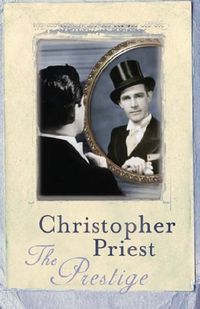
    The Prestige This book intrigued me such that I recently bought a copy at SFO for the long flight back to the UK. It’s just been released as a second-rate motion picture. I haven’ t seen the film, but there’s a fascinating angle to the book for anyone involved with the professional speaking business.

    The two main characters in this sensational Victorian melodrama are rival magicians whose stage acts provide entertainment in the Music Halls of nineteenth-century London. The book chronicles their careers. What’s fascinating is how much like the business of professional speaking today the business of the professional magician was then.

    They have their professional associations, journals and tricks of the trade. E very magician preserves their tradecraft:

    Magic has no mystery to magicians. We work variations of standard methods. What will seem new or baffling to an audience is simply a technical challenge for other professionals. (p.68)

    They struggle in the early days of their career, learning to showcase their tricks as they learn to tolerate rejection by booking agents. They perform to small audiences where and when they find them. They bomb. They try again. They struggle to establish themselves:

    The real problem with theatrical bookings is that while they pay well they provide no continuity. Each is at the end of a blind alley. I do my act, I take my applause, I collect my fee, but none of these ensures another booking. Even the reviews in the press are small and grudging. (p.172)

    As today, the secret is finding a niche. It might be running seances, or assuming the character of a French scientist, or embracing the use of the novel aspects of electricity in an act. Their careers peak and they struggle to reinvent themselves. The demands are relentless:

    A magician can never practise enough, because every moment spent will improve his performance. So I toil in my workshop…and rehearse until I feel sick with preparation. Although my skill with prestidigitation increases, sometimes, in my darker moments, I do wonder why I am continuing to rehearse at all. (p.210)

    In the days before television and radio, the internet and mobile connected c0mmunications, these entertainers were the superstars of their day. Those who make their living on the podium today play to much diminished audiences. The volume of bookings, attention spans of audiences and desire for entertainment to be delivered in person were far greater for the Victorians. There were no requirements to turn off cell phones before a speaker came onstage, no glances at a Blackberry if the message was not compelling. Of course, limelight played havoc with your sinus condition and the demands of a roadtrip were just that.

    If you want a ripping good yarn, pick up a copy of The Prestige.

    Announcing: Internationally Speaking

    The NSA International PEG (Professional Experts Group) is a group of around 100 NSA members with an interest in speaking in different countries. Many members travel internationally as part of their speaking career.

    I was asked by the PEG Chairman, Garth Roberts, to develop a multi-author blog so that his members could both read and post items of interest to the group. This is a wonderful use of blogging as a community resource rather than just for the writing of a single individual.

    After some discussion of the merits of Blogger and Typepad we decided to use Typepad Pro, which allows multiple authors to post to one blog. In a surprisingly short time I was able to create the blog and Garth is currently recruiting a stable of authors from among the membership.

    Take a look at Internationally Speaking and let me know what you think.

    If you are interested in what professional speakers who travel the globe get up to, subscribe to the blog and find out.